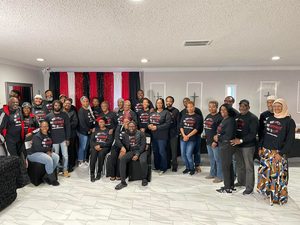
In full disclosure, I am a member of the American Descendants of Slavery Advocacy Foundation (ADOS Advocacy Foundation).
The ADOS Advocacy Foundation arose in response to a national landscape rife with yawning racialized gaps. With an eye toward the origins of these asymmetrical outcomes located in the institution of slavery, our organization prioritizes reparations for descendants of chattel slavery in the United States. Currently, we are the largest grassroots organization in the United States focusing on reparations for ADOS.
A few months ago, our organization released a pivotal book on reparations. I have had the opportunity to read the book at least three times, and I want to share some of its highlights.
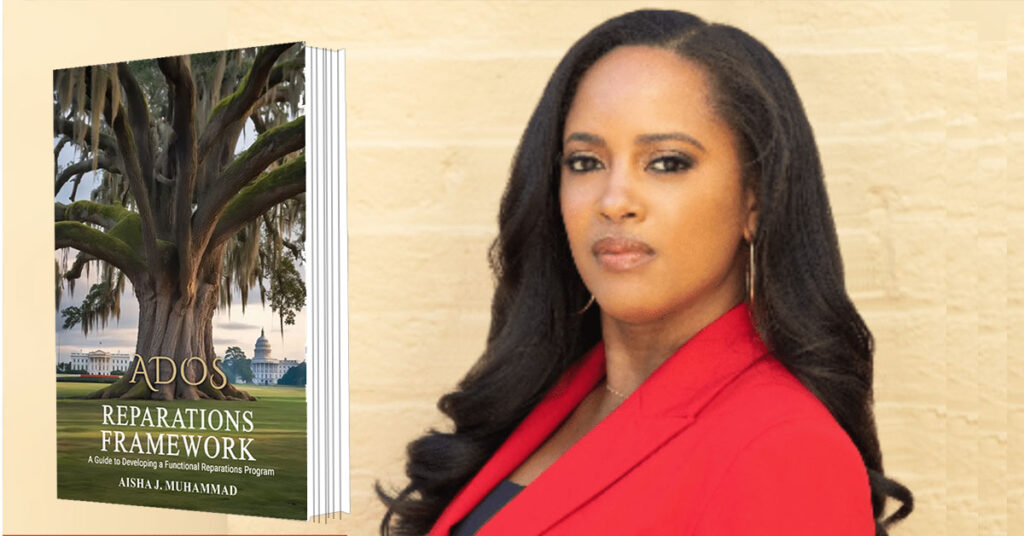
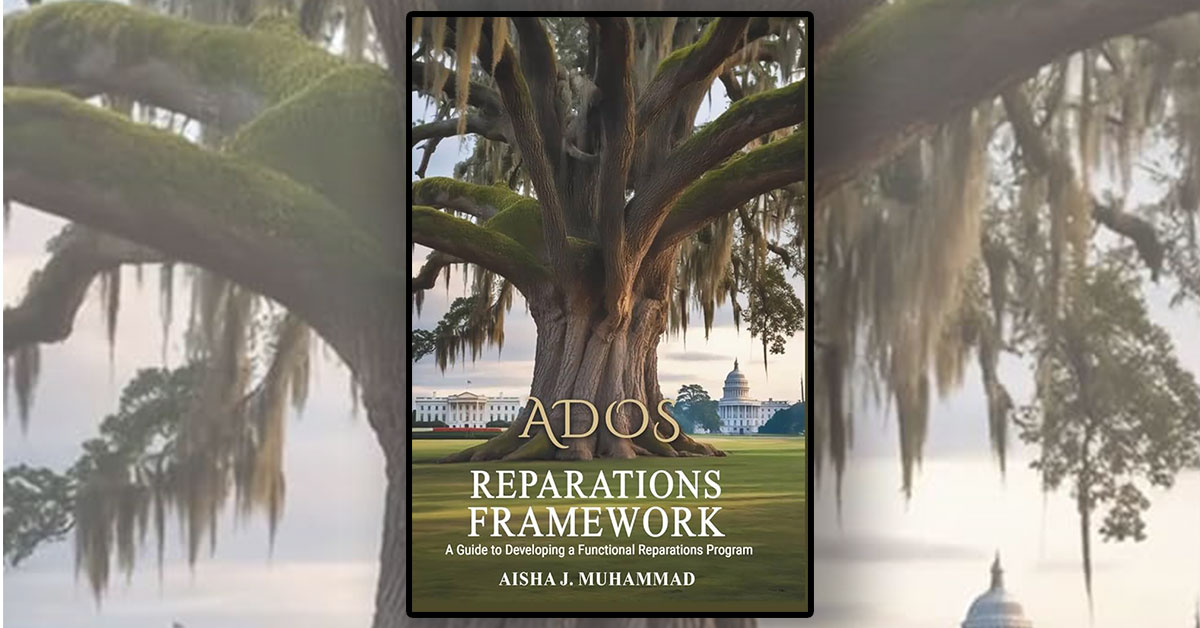
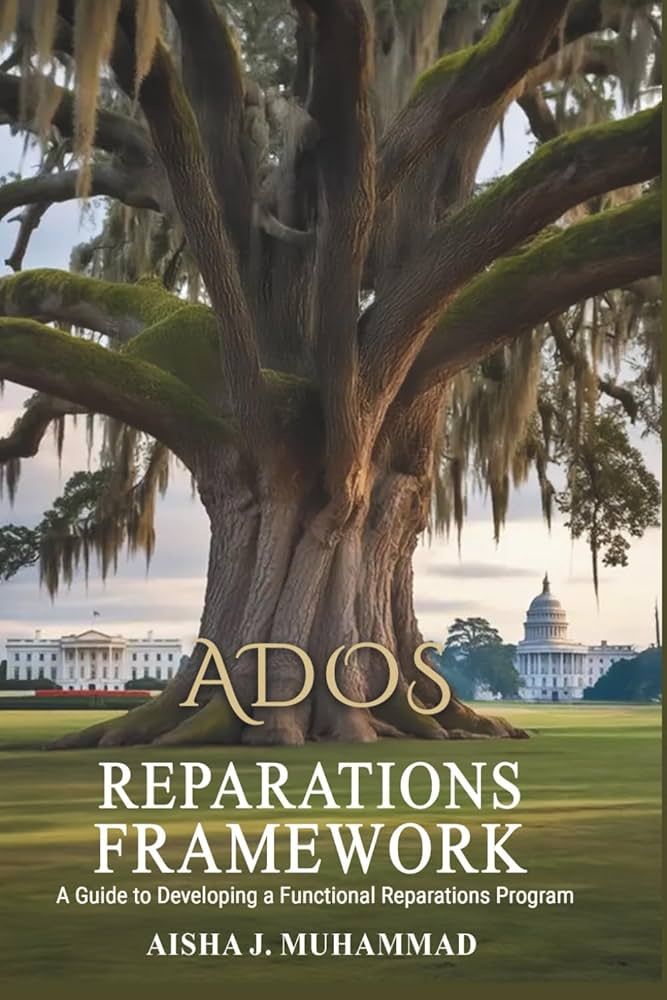
The book, titled The ADOS Reparations Framework: A Guide to Developing a Functional Reparations Program by Sister Aisha Muhammad, takes readers on a compelling journey toward achieving true justice for American Descendants of Slavery (ADOS). Published in August 2025, this concise and impactful 55-page guide is written with empathy and a clear sense of purpose. As the Director of Policy at the ADOS Advocacy Foundation, Sister Aisha leverages her extensive expertise in history and public health to not only advocate for reparations but also provide a practical roadmap for turning these transformative changes into reality for families and communities like her own.
At the heart of Sister Aisha’s message is a simple but powerful truth: reparations should be specifically targeted toward those who can trace their roots back to enslaved ancestors in the United States. She speaks directly to the unique hardships that ADOS families have endured, explaining that their needs can’t be fully met by broad diversity programs or generalized Black initiatives. Her lineage-based approach is a call to ensure that real people, with real family histories, finally get the recognition and support they’ve been denied for generations.
The framework doesn’t stop at high-level theory—it’s a hands-on guide for change. Sister Aisha breaks down reparations into five actionable areas that touch on the everyday lives of ADOS families:
- Building government offices dedicated to reparations, staffed by people who care deeply about the mission
- Delivering direct cash payments to eligible individuals—putting resources directly into the hands of those who need them
- Helping ADOS families own land and build generational wealth, so future children have a solid foundation
- Transforming schools so ADOS children can thrive and reach their full potential
- Establishing strong mental health programs and healing initiatives that honor the emotional legacy of slavery
Sister Aisha doesn’t just rely on stories;s she backs up her recommendations with hard facts, compelling data, and research on the racial wealth gap. She estimates that at least $20 trillion is needed to truly repair the damage inflicted on ADOS communities, making it clear that reparations aren’t just a matter of principle—they’re about finally making things right at a systemic level.
The book passionately advocates for a comprehensive federal reparations program, emphasizing its superiority over fragmented local initiatives. Sister Aisha proposes the creation of a dedicated federal agency focused exclusively on guaranteeing that every eligible individual receives the support they are entitled to, ensuring fairness and delivering meaningful outcomes for real people nationwide.
Above all, Sister Aisha’s framework is grounded in action. It’s not just a call for reflection—it’s a guide for rolling up your sleeves and getting to work. She gives policymakers and community leaders concrete steps for moving beyond words and apologies, toward the accountability and positive outcomes that ADOS families have long been waiting for.
Upon evaluation, this book demonstrates clarity and accessibility in its writing style, successfully presenting complex topics in a comprehensible manner. The framework is grounded in historical context and empirical evidence, offering a practical guide for legislators and advocates seeking to effect change. However, the book has certain limitations. Its relatively brief length may not satisfy readers interested in extensive personal narratives or detailed case studies. Additionally, while the work primarily addresses federal initiatives, it provides limited consideration of potential actions at the local or state levels.
In conclusion, Sister Aisha Muhammad’s work is a vital read for anyone who cares deeply about what genuine reparations could look like for American Descendants of Slavery. Her approach is forthright, practical, and always focused on solutions that will truly matter in people’s lives. Whether you’re a student, a leader, or an advocate, this book will leave you both informed and inspired to take meaningful action for justice.
Additional Resource: Critical Mass Podcast
AI Video Summary
The Critical Mass Podcast discusses the ADOS Advocacy Foundation’s comprehensive reparations framework, emphasizing that freedom without redress is not true freedom (0:51). The conversation highlights the historical injustices faced by American Descendants of Slavery (ADOS) and the need for targeted, lineage-based reparations (2:01).
Key aspects of the reparations framework include:
- Necessity of Reparations: The unique economic disadvantages created by slavery continue to manifest as the racial wealth gap and intergenerational poverty, necessitating direct compensation and material repair from the U.S. government (2:15-3:06).
- Development of the Framework: The ADOS Advocacy Foundation’s reparations framework was developed over four years, involving extensive literature reviews, historical and legal analysis, and data collection. It examined domestic and international reparations programs to formulate a multi-phase strategy addressing centuries of state-sanctioned harm (15:52-16:46).
- Five Essentials of Repair: The framework outlines five essential components for repair:
- Administrative: Establishing a Department of ADOS Affairs (DAA) to safeguard ADOS genealogy and administer reparations (30:09-30:15).
- Education: Incorporating ADOS history into education to combat historical omission and propaganda (49:07-50:29).
- Land: Creating an ADOS land trust to address historical land theft and provide tillable ground for families (58:07-58:43).
- Mental Health: Addressing the multi-generational toll of slavery and systemic oppression on mental health, recognizing poverty as a risk factor for various negative outcomes (1:05:39-1:06:44).
- Financial: Proposing a $20 trillion down payment based on calculations of unpaid labor and lost wages, emphasizing the need for financial restitution, including intellectual property and patents (1:16:47-1:18:01).
- Eligibility Criteria: Reparations are lineage-based, with specific criteria debated and fortified by the team to ensure that those eligible are direct descendants of enslaved people in the U.S. (34:53-35:34).
- Protections for the Framework: The framework includes legislative protections and oversight to prevent abuse and ensure the long-term preservation of records and the integrity of the reparations process (1:29:53-1:30:17, 1:34:50-1:35:01).
The video concludes by encouraging people to join the fight for reparations, highlighting it as a crucial moment to achieve justice and ensure the debt owed to American Descendants of Slavery is paid.

Bilal Shabazz was born in Fresno, California and earned a B.S. in Cellular Physiology with a minor in Chemistry from CSU Fresno in 1992. He also completed Master's coursework at Barry University. At CSU Fresno, he served as president of the African and Black Student Union and received the Rosa Parks Leadership Award for his advocacy on Black American issues.
He converted to Islam in 1989 and played a key role in founding the first mosque in west Fresno, a predominantly African American community. Additionally, he contributed to coalition-building efforts with local Chicano La Raza movements in California’s Central San Joaquin Valley. He has remained actively involved in community organizing and local political activities in Fresno.
He currently resides in Miramar, Florida and actively participates in the local chapter of the American Descendants of Slavery Advocacy Foundation (ADOS Advocacy Foundation). He is also involved with the Muslim American Society (MAS) – South Florida Chapter and serves on the MAS National Governing Board. Previously, he was a shura board member at Masjid Al-Ansar—the oldest mosque in Florida—located in Liberty City, also known as Muhammad Ali’s Masjid. He has been married to Malika AbdurRahman for 33 years and they have three children. Professionally, he is the Chief Executive Officer of his Clinical Research Management company, which focuses on oncology clinical research trials.