
As we begin to close out the month of Shawwal, I’m reflecting back on the month of Ramadan. Alhamdulilah, I’m feeling grateful for having made it through another Ramadan. Yet, there is a little feeling of regret as well. Did I really take full advantage of the opportunity Allah gave me? Can I carry that momentum of gratitude and remembrance throughout the year?
This is where the month of Shawwal comes in.
Shawwal is not simply a transition back to normal life. It is an invitation to continue the momentum of Ramadan. Ramadan trains the heart. Shawwal tests its consistency.
The Prophet Muhammad (pbuh) gave us a clear way to carry Ramadan forward. In Sahih Muslim, he is reported to have said:
“Whoever fasts Ramadan and then follows it with six days of Shawwal, it is as if he fasted the entire year.”
This hadith is not only about the reward of fasting. It is about building continuity. It shows us that what we begin in Ramadan is meant to extend beyond it. The six days are a bridge. They help shift us from a season of worship into a lifestyle of worship.
There is also a deeper lesson here that I want to highlight. In another hadith, the Prophet is reported as saying:
“The most beloved deeds to Allah are those that are consistent, even if they are small.”
This is the spirit of Shawwal.
Shawwal is not about maintaining the exact intensity of Ramadan. That would be difficult for most people. Instead, it is about protecting the habits that matter most. A portion of Qur’an each day. A few extra prayers. A slight increase in our remembrance. A few extra intentional acts of service.
Shawwal reminds us that our relationship with Allah is not meant to rise and fall with the calendar. The same Qur’an we read in Ramadan is still with us. It’s on our bookshelf longing to be read!! We have the same opportunities to give, to serve, to be kind, and to grow.
For us as a community, this message carries even more weight.
Ramadan brings us together in powerful ways. We pray side by side. We share meals. We feel a sense of unity that is hard to describe. The barriers we have between us soften. Conversations open. There is a sincere sense of care and concern that is felt. Masha-Allah, that love for ones sister and brother is one of the best things about Ramadan.
Shawwal asks a simple but important question: how do we carry that forward?
Unity is not meant to be seasonal. It is meant to be sustained through consistent connection. That means continuing to show up for one another. Continuing to build relationships across communities. Continuing to support the work that strengthens us collectively.
At MANA, this is the heart of what we do.
We listen to the needs of the community. We strive to find our shared challenges. We connect individuals and institutions so that solutions can emerge. And we continue to assess and adjust so that our work reflects what the community actually needs.
That process does not end with Ramadan. In many ways, it begins there.
Shawwal is a reminder that growth is not defined by a single month. It is defined by what we do after the moment passes. Our faith is built through small, steady actions that accumulate over time.
Fast a few extra days. Keep a portion of your daily Qur’an. Stay connected to your local community. Reach out to someone you prayed beside in Ramadan and check in on them.
What Ramadan started, Shawwal helps us continue.
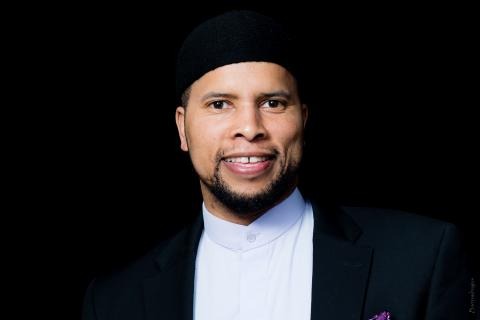
Joshua Salaam has strong roots in the American Muslim community. He started attending national Muslim youth camps at the age of 12 and continued as a participant, counselor and speaker for over 30 years. Joshua entered the U.S. Air Force in 1995 and served as a Police officer for four years. He was a key contributor in establishing Friday prayer services on base for Muslim military members and went on to serve as an Imam in Goldsboro, NC for several years. After the military, Joshua immersed himself in community activism. He managed the Civil Rights department for the Council on American-Islamic Relations from 2000-2004 and helped oversee a Baltimore Muslim community and neighborhood development project from 2004-2007. Before starting at Duke in July 2018, Joshua worked with youth and families for 11 years at one of the largest Muslim communities in America. His diverse background gives him a unique perspective on many issues and helps him connect with students. He holds a Master’s Degree in Religious Studies and a Doctorate of Ministry from Hartford Seminary. He is the current President of MANA’s Board of Directors.