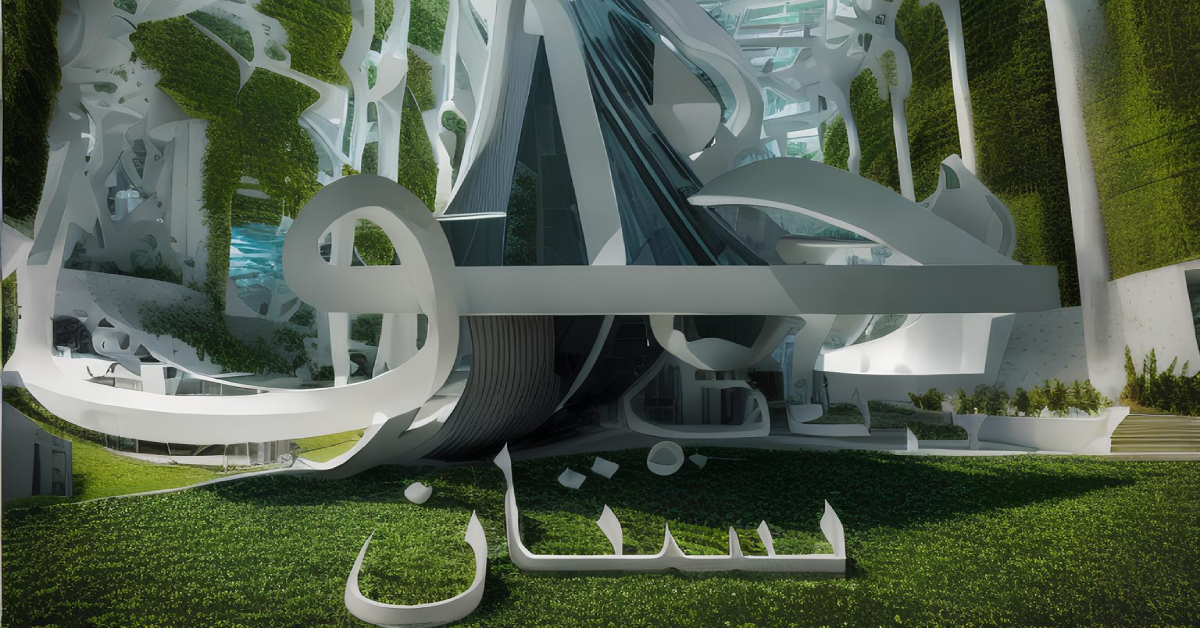
Al-Bari; The Evolver, Al-Barr; The All-Good
Breathe
Take a breath
Expand with your garment
You’re filling with air
You are, you wear, you are worn
You wearing this body, are worn
You are wearing this body, you have been worn
Borrowed fibers, grasp your strand
The good strung through
Your life’s loom, on loan
Your best interests thread it properly
You don’t own property, gasp
Exhale what profits you here
In deed, you have been warned
Warning
________________________________________________________________________________________________________________
We aren’t some spontaneous occurrence. Reflect on the perfect systems and design of creation around us. Draw from observations, there is a rhythm within this designed system. A purposeful balance, a pure reality. Everything in complete submission to The All-Powerful, The Architect, The Creator.
We are made aware of it from within it- having been granted limited agency, no real ability to control or escape the design’s framework. We must also have a meaningful part to play. The design is the way of life. And we, uniquely self-aware, are sent guidance.
The Creator, The Originator, The Fashioner, The Sovereign, is All-Knowing, All-Seeing, All-Hearing, All-Aware of His creations. He embodies the highest essence of all attributes. We’re often distracted from understanding that this is our fundamental part in the design of life. Be in remembrance. Go from aware to conscious, then act accordingly. Use the guidance around and within to best maintain in that original balance.
Commanded to come down for a time as Caretakers, to use this lowest, nearest realm as a temporary place of provision, a tool. A test to see who among us is best in deed. The rest of creation needs no manual; yet, forgetful as we are, we’re entrusted particular guidance. Those who submit to revelation call to it.
The best example of one calling is the Messenger of Allah ﷺ, and what’s being called to is Revelation. Be a caretaker, a servant of the Most Compassionate, in the earth. Conscious actions and ethics are being called to it a shift of values; good works, truth, righteousness – evident reality. Invite toward recognition, manifest appreciation and service.
Actions are only by intentions; the reasoning behind the invitation is essential. To practice caretaking in the balance and recognize systems that offset that balance. Aware of a good to do, encouraged to be conscious of how. The signs surround us in the way of life. We’re offered this clear direction from the Sovereign of us and all that we’re entrusted with for a brief period
Listen. The next time you say bismillāh. at the meal, at the door, at the start of any small thing. Pause one breath. Let the words sit in your mouth. Then move into the act. You have not, in that moment, asked Him for anything. You have only recognized that you are walking under His canopy. The canopy was always there. It was there when you woke this morning, before any prayer was said. It was there when you took your first breath as a child. It will be there at the last. Walk under it now. He is closer than the breath you are breathing. He is the One who is sustaining the breath itself.
Bismillah, Here we go. A leaf. Right. Take a leaf. I’m going pick a – this plant. This is a blade of grass. It’s a leaf. I’m going to act like it’s a leaf. Right. All right. So, Al-Khaliq; The Creator, created the leaf. Al-Bari; The Evolver, The Grower grew the leaf. At a point it became green and we can understand this pigmentation, color as that – a measurement decreed by Al-Musawwir; The Former, The Fashioner. The One Who gave this unique form to the creation we called a leaf. All its measurements, its greenness, its weight and shape… ect each one of these taqdir, measurements originating from the ‘Qadr’, The Decree prescribed to every thing. The sunlight that comes to the leaf is ‘Risq’ (Provision); Allah is The Ever-Providing, Ar-Razzaq. That realization is risq from the names of Allah; these recognitions in the creation and the layered sequence we see examples, Ayat (signs) manifest in creation. The sequence of how Allah decides to do a thing is the ‘Sunnah’ (Way) of Allah. Recognizing that sequence is a way to remember Allah, a key in every state and every thing.
Another of Allah’s names is Al-Qadir; The All-Powerful. He is the only One with the power to give the measurements to anything in creation. Let’s look at the process of the leaf becoming green: it gets light from the sun, right? Allah, Ar-Razzaq; The Ever Provider. The leaves exchange light and carbon dioxide, facilitating the oxygen we breathe, but the sun doesn’t inherently own light. The sunlight comes from Allah because Allah is Al-Nur; The Light of the heavens and the earth as He reminds us in The Quran:
“And Verily We have sent down Ayat (Signs, Proofs, Evidences) clear and an example of those who passed away from before you and an admonition for those who conscious of Allah. Allah Light the heavens and the earth. Example His Light like a niche in it a lamp; the lamp in a glass, the glass as if it were a star brilliant is lit from a tree blessed – an olive not east and not west would almost its oil glow even if not touched it fire. Light upon Light. Allah guides to His Light whom He wills. And Allah sets forth the examples for mankind. And Allah of every thing Al-Alim, All-Knower. In houses Allah ordered that they be raised and be mentioned in them His name. Glorify to Him in the mornings and the evenings. Men – not distracts them trade and not sale from remembrance of Allah, and from establishing salah, the prayer and giving zakah (spending from what they are given) They fear a Day will turn about therein the hearts and the eyes.” (Quran 24:35-37)
Bismillāh ar-Raḥmān ar-Raḥīm. You have spoken these words. You have spoken them at the start of countless small things – before eating, before traveling, before sleeping, perhaps before reading these very lines. They were on your tongue the first time you can remember any words at all. They will be among the last when life closes. The whole Quran opens with them; one hundred and thirteen of its one hundred and fourteen surahs begin with them. And in the middle of that formula stands a Name that is, quite literally, the second word in your scripture, after only the proper Name Allāh itself: ar-Raḥmān. The Most Merciful. The Entirely Merciful. The One whose mercy is so vast that the Arabic language itself ran out of intensifiers and built a special form of the word reserved for Him alone. You have been speaking this Name your whole life. You have not, perhaps, met it. This chapter is for the meeting.
The Quran says “Say: Call upon Allāh, or call upon ar-Raḥmān; whichever you call upon, to Him belong the most beautiful Names” (Quran 17:110). Notice what just happened in that verse. The Name ar-Raḥmān is placed alongside the proper Name Allāh itself, as functionally interchangeable in invocation. No other Name in the entire canon receives this treatment. Ar-Raḥmān is the Name that comes the closest to standing-in-for the divine identity itself. And the Quranic reason it can do this is the reason its morphological form was reserved from creaturely application: a creature can be raḥīm (merciful in some particular relation), but no creature can be raḥmān vast-mercy-as-state, mercy-so-large-it-defines-the-being. That is why a person named “Rahman” must always be called ʿAbd ar-Raḥmān, servant of the Most Merciful: even our names point us back to Him.
The Quran says of His Throne, that highest of created things, the cosmological-roof above all that exists: “The Most Merciful established Himself over the Throne.(Quran 20:5)“ Of all His Names, ar-Raḥmān is the only one paired with the Throne in this construction. Read what that pairing means: mercy is the governing principle of the cosmos. Not mercy as one attribute among many. Mercy as the frame under which every other attribute operates. Imam al-Ghazali calls this mercy that is perfect and inclusive: perfect in that it actually meets the needs of those in need; inclusive in that it embraces the deserving and the undeserving alike. The Throne stands above creation. Mercy stands above the Throne. The structure of the universe rests, finally, on this.
There is a hadith in Bukhari and Muslim, on the authority of Abu Huraira, that the Prophet ﷺ said: “Allāh created mercy in one hundred parts. He kept ninety-nine with Himself, and sent down one part to the earth. From that one part, every creature shows compassion to one another – even the mare lifts her hoof from her foal lest she should harm it.” (Sahih al-Bukhari 6469; Sahih Muslim 2752.)
Sit with this for a moment.
Every kindness you have ever received from another human being, from your mother’s first holding of you, to the friend who showed up when you most needed it, to the stranger who stopped to help you carry a heavy bag; every one of those mercies was an operation of one percent of His mercy distributed in creation. The mother nursing her child; the doctor sitting late with a patient; the teacher who saw what you needed before you knew yourself; the surgeon’s hand steady through eighteen hours; the policeman who chose gentleness; the elder who forgave when forgiveness was undeserved; even the beasts in the field that mind their young and the birds that cry warning to one another; all of this is one allotment. The remaining ninety-nine portions are reserved with Him for the Day when He will pour them upon those who seek Him.
You have been swimming in raḥmah your whole life. You have been a recipient of more mercy in a single day than you can count. And the hadith means to tell you: what you have witnessed is one percent. When the believer realizes the proportion that the mercy of every-mother for every-child across all-of-history-and-all-of-species is one percent of the divine economy, the heart loses the appetite for despair. There is, at the structural level of the universe, that much mercy held back for the Day. The fear-driven theologies of an angry God collapse before this hadith. They cannot stand. The Inscription on the Throne reads, in another hadith: “Verily My mercy predominates My wrath.” (Sahih al-Bukhari 7404; Sahih Muslim 2751.) Mercy is not balanced against wrath in some neutral equilibrium. Mercy is prior and prevailing. He has written this above the Throne in His own writing.
This is the story that anchors ar-Raḥmān in your life. You can return to it whenever the world feels mercy-poor. You are not short of His mercy. You may be, at the moment, short of the mirrors that reflect it. He has stored the rest. It is coming.
At the threshold of every act. Bismillāh ar-Raḥmān ar-Raḥīm. You will recite these words today, perhaps without consciousness. Slow down. Let the words sit in the mouth for a half-second longer than usual. In the Name of Allāh, the Most Merciful, the Most Compassionate. Recognize: the threshold of this act is being crossed under the canopy of His mercy. Whatever follows: meal, conversation, journey, work. All operates beneath that canopy. The raḥmah is not invoked-into-being by the formula; it is recognized as already present. The recitation tunes the recognition. You walk through the next moment, seeing what was already there.
In the body’s own architecture. Every human being on earth came out of a womb. The Arabic word for womb is ar-raḥm, etymologically derived from raḥmah. The biological-organ that brought you into being is named for the divine attribute that authored you. Every cell of you was assembled inside a sanctuary that bears this Name. You did not earn the months you spent there. You did not deserve the steady warmth, the regulated nutrition, the protective tissues, the gentleness of arrival. You were carried by raḥmah before you knew the word for it. And Imam Ghazali asks the believer to consider if Allāh’s mercy could meet you in the form of nine months of that, what is the mercy waiting at the Day?
In the kinship of all creation. The hadith of the 100 Portions says explicitly that the one percent is what runs through all species, not just humans. The mare’s hoof lifted from the foal. The bird that returns at evening to feed her young in the nest. The pod of orcas that grieves a death for weeks. The dog that recognizes the missing child and sits at the door waiting. These are raḥmah operating in the structure of creation itself. To recognize ar-Raḥmān is to look at the kinship of creation and see in it the operation of one Name. The believer does not need to anthropomorphize the animals or sentimentalize them. The believer simply recognizes: the architecture in which compassion can occur at all across species, across boundaries, between strangers is a structure He authored.
In the framing of every other recognition. ASMA 03 puts it this way: “Ar-Rahman frames every other Name. He’s merciful with His knowledge. He’s merciful with His sight. He’s merciful with His power. So He introduces Himself as Ar-Rahman before Al-ʿAzīz; The Allmighty, Al-Jabbar; Th Irresistible Restorer, Al-Qahhar; The All-Prevailing, because even when His might shows, He never stops being the Most Merciful.” When you encounter Allāh’s might, His judgment, His correction, recognize ar-Raḥmān operating first, as the prior frame. The judgment is merciful judgment. The might is merciful might. To meet His other Names without first meeting ar-Raḥmān is to misread the structure of revelation itself.
In the four tiers of Ghazali’s love. Imam al-Ghazali names four ways the Most Merciful loves you: first, by creating you; second, by guiding you to faith and to the means of salvation; third, by making you happy in the next life; fourth, by granting you the contemplation of His noble face. Each of these is a level at which ar-Raḥmān meets you. You exist because He loved you by creating you. You found this scripture, this Name, this moment of attention because He loved you by guiding you. The hope that holds you forward the joy that awaits is His love for the rest of your life-arc. And the vision of His face, is the ultimate raḥmah prepared for those who reach it. You are not alone in any of these tiers. You are loved at every one.
In the moment of unexpected kindness. A stranger pays for your coffee. A driver lets you in. A nurse stays past her shift. A colleague says the right thing. A sibling forgives. That was the one percent operating. It was not random; it was distributive. The believer who recognizes ar-Raḥmān in lived life learns to read these moments as signs small visible movements of an immense reservoir of mercy and to respond not just with thanks to the stranger…
but with thanks to the Source while still thanking the stranger, as one who is not thankful to creation is not thankful to the creator. Alḥamdulillāh on the lips becomes the proper response.
In the sustaining of every breath. Quran 67:19 says of the birds in the sky: “no one holds them up except the Most Merciful.” That same sustaining holds you up. The breath you just took did not happen by your management. The heart that just pushed blood to your brain did not consult you. The neurons that read these letters as words are firing in patterns you do not author. Ar-Raḥmān is the sustaining.
So, what is the reality of a ‘tree’? Its tree-ness is a state of being, and this state of being, like all other states, is of ‘Alhamdulillah’; the means of it doing this are apparent in the systems that compose its evident tree tree-ness. It’s being created, evolved/grown, formed/molded, provided for via a process whereby it receives light from another process driven by the One Who made the sun. Names and Attributes of Allah are apparent via reflection on creation, which are understood through His Amr, Commands, and compose the Sunnah, Way/System of Allah. Can we form an interactive classification framework that models and links ecological functions to reminders of specific Divine Names and Attributes?
Each Name/Attribute is cast as a lens filter through which caretakers can view environmental challenges. The divine Commands, Amr, that form processes in creation become protocol rights governing interactions. Our understanding of Haqq, truth/right/reality, shifts as more and more layers are constructed between us and reality. Before long, the oxygen I breathe in is not from leaves or trees but from ‘photosynthesis’, so I don’t see much wrong with clear-cutting the old-growth forest for paper. The green of one provision is made to seem closer than the other. Similarly, water comes from the nearest tap rather than the river, so dumping waste in waterways seems to be a realistic solution. It’s a lot easier to transgress Haqq, reality, and right[s], the lower our consciousness of it is. To grasp the reality of a given is to hold its rights as more than sensory observations; it requires insight and guidance via carefully God-Concious work. Lets get started – fisabilillah.

http://www.Haalproject.org