In the female body, menstruation is more than just an indicator of whether pregnancy was achieved or not. The menstrual cycle is an elaborate and intricate symphony of events that shift and shape a woman on a daily basis. More than periods, the sequence of ovulation, menstruation, and potentially gestation, impacts key biological functions such as mental focus, energy, metabolism, physical strength, stress responses, and moods; insomuch that dysfunctions in our menstrual cycle can predispose women to mood disorders. Dr. Christian Northrup shares in her book, The Wisdom of Menopause, that women who experience challenging premenstrual syndrome (PMS) are more likely to experience Seasonal Affective Disorder (SAD), Postpartum Depression (PPD), and a rocky perimenopausal transition. It may seem implausible that the often overlooked and ridiculed premenstrual symptoms could have such a far-reaching impact; however, this is often rooted in our ignorance about the power and potency of our monthly cycles.
In 2015, the American College of Obstetrics and Gynecology described the menstrual cycle as a vital sign in adolescents. This means that, much like other vital signs, the menstrual cycle is a metric of health and function in the female body. Many of us were taught that a normal period is whatever our ‘normal’ is. And as such, women have endured decades of their ‘normal,’ even if that means debilitating pain, heavy bleeding, erratic moods, vomiting, passing clots, and passing out. These symptoms are often met with prescriptions of pain medication, contraceptives, or antidepressants. However, the opportunity to understand the cause of the hormonal imbalances that contribute to menstrual dysfunction is missed and can carry over into the broader terrain of our mental health, fertility, pregnancy, and postpartum.
When Allah ta’ala says in Surah Ali Imran, “and the male is not like the female”, there is an evident physiologic differentiation, as well as a practical application that both prescribes and excuses certain rituals and practices in response to menstruation, pregnancy, and birth. These experiences are states of total surrender and submission. However, social and cultural demands that assume that women should be expected to perform with daily consistency and productivity ignore our dynamic design and cyclical rhythm.
Even in the wellness and fitness industry, advice and regimens are dispensed equally to men and women, ignoring that the phases of our menstrual cycle impact how our bodies respond to the exact same inputs, producing varied responses in our performance and well-being. Similarly, static demands of school, work, and service can compromise women’s hormonal health, which has shifting needs. The ovulatory desire to connect with others features peak energy, heightened physical strength, enhanced verbal skills, resilience to stress, lower metabolism, insulin sensitivity, and the bonus of glowing skin and shiny hair. This is the most prized time of the monthly cycle. However, it is equally as valuable as our luteal tendency to analyze, critique, withdraw, and seek completion and order with a lower resilience towards stress, faster metabolism (hence the cravings), insulin resistance, and a need for more rest and self-care. Women are not failing when we don’t feel, focus, and function the same way every day– we are cycling–ebbing and flowing, waxing and waning, as Allah ta’ala designed us to do.
Instead of segregating menstrual health, mental health, and maternal health as distinct and unrelated fields, I believe that the way we learn to embrace and live with our menstrual cycle is a cultivation space for developing healthy boundaries, recognizing our unique nutritional needs, and embracing rest and self-care, which are critical tools for supporting our mental health and receiving care in the postpartum period. Hyper-individualism and perpetual productivity negate the feminine nature to ‘tend and befriend’ in times of stress, be resourced by communal care, and appreciate the seasonal blueprint of sowing, growing, harvesting, and reflective reprieve. This is not to negate the significance of mental health treatment and therapies, but to bring attention to another lens through which we can support women in approaching thriving health that meets our physiology exactly where we are.
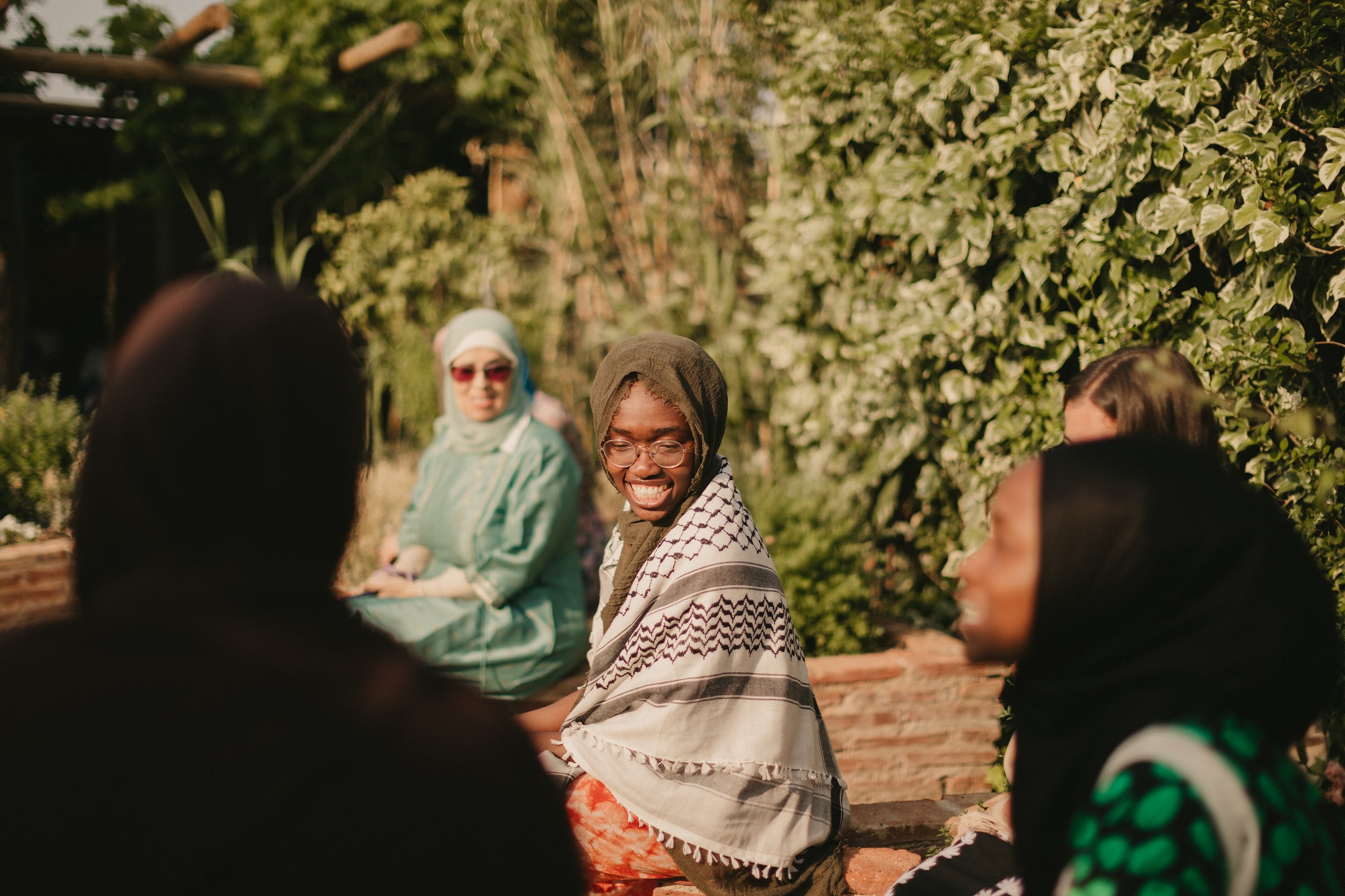
Feature photo credit: Maaria Lohiya, Women’s Retreat in Spain

Chantal Blake is a Menstrual Health Educator and author with a professional background in
Nursing, Environmental Engineering, and Peristeam Hydrotherapy. She weaves the fields of
medicine, environmentalism, and holistic self-care into fascinating and practical
instruction for women of all ages.
Chantal’s first book, Peaceful Periods: Holistic Womb Care for Teens, is championing an
international movement of empowering and positive menstrual health education backed by
science and traditional wisdom. You can download a free excerpt at www.honoredwomb.com
and follow her work on Instagram and Facebook: @honoredwomb.