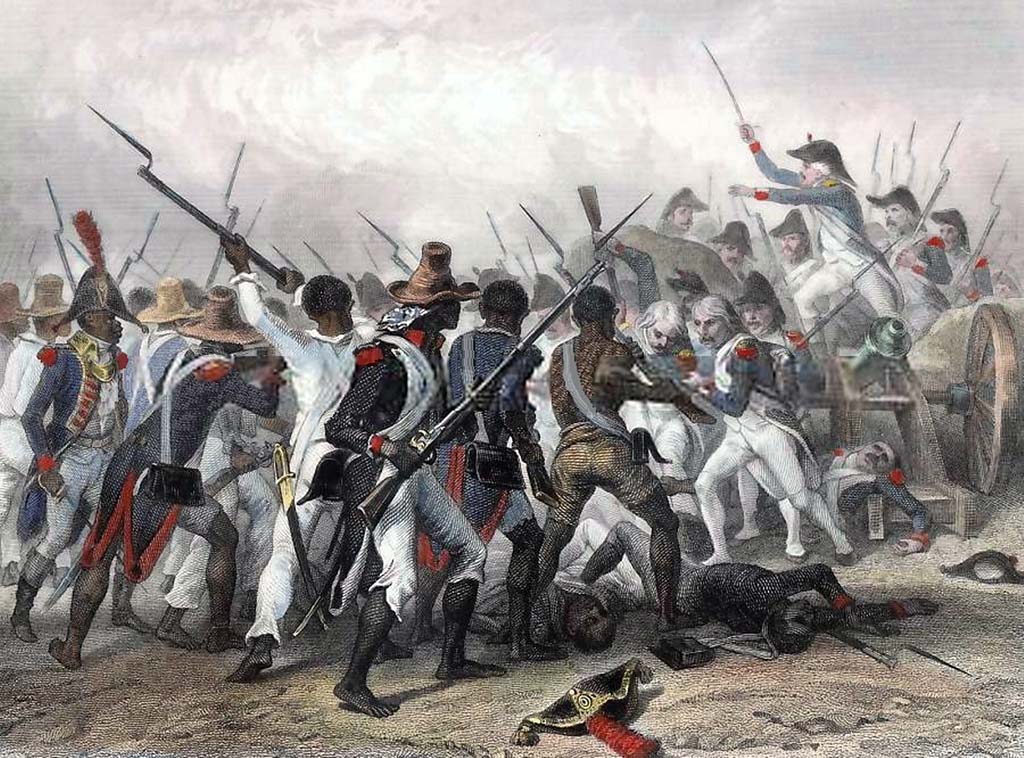
(August 23, 2025) – As the crescent moon ushers in a new day, the global Ummah joins the world in solemn commemoration of the UNESCO International Day for the Remembrance of the Slave Trade and its Abolition. This day is anchored to the anniversary of a night of divine fury and human courage: the uprising on August 22-23, 1791, on the island of Saint-Domingue, modern-day Haiti.
On that night, enslaved men and women, our ancestors in humanity and often in faith, launched a revolution that shattered chains and forever altered the course of human history. For Muslims, and particularly African American Muslims who carry the legacy of both enslavement and emancipation in their very identity, this day holds a profound and specific weight. It is a time to reflect on a past of profound tragedy, to celebrate the unyielding spirit of resistance, and to draw direct lines from that sacred struggle to our present obligations.
Honoring Our Legacy of Faith and Resistance
Historical scholarship, such as that found in Sylvaine Diouf’s seminal work “Servants of Allah: African Muslims Enslaved in the Americas,” reveals a truth that must be central to our remembrance: the fight for freedom in Haiti was waged by a diverse coalition of enslaved Africans, among whom were a significant number of Muslims.
Leaders like the strategic maroon François Macandal, a Muslim and likely a marabout (a religious scholar), provided not only military tactics but spiritual fortitude. Boukman, whose very name suggests he was a “man of the Book” (Al-Kitab, the Quran), helped ignite the revolution through prayer and powerful invocation of the Divine. They organized resistance, inspired thousands, and proved that the quest for justice has always been a multi-ethnic, yet deeply spiritual, struggle.
This legacy of Muslim resistance in Haiti finds its powerful echo in our communities today. The African American Muslim community, born from the struggle for liberation and civil rights, understands the language of both oppression and divine hope. We must all endeavor to see the plight of Haiti’s people and its small but historic Muslim population, not as a distant crisis, but as a continued call to action rooted in a centuries-old bond forged in the fight for freedom.
From Historic Injustice to Modern Crisis: Answering Haiti’s Call
The nation born from that righteous revolution is now gripped by a devastating humanitarian crisis. The descendants of those freedom fighters face rampant gang violence, political instability, and modern forms of exploitation. We cannot sincerely honor the Shuhada (martyrs) of 1791 without confronting the suffering of Haitians today.
As a community with immense moral authority and a history of effective advocacy, we must raise our voices. Human rights advocates are calling on the international community, particularly the United Nations Security Council and donor nations, to robustly support the deployment of an African-led Multinational Security Support Mission.
We must urge our leaders to ensure these peacekeepers receive:
- Increased and expedited funding to allow for effective deployment.
- Essential equipment and logistical support to operate in a complex urban environment.
- A strong mandate to dismantle criminal gangs, restore order, and protect civilians, thereby paving the way for free elections and sustainable development.
Furthermore, true Islamic justice and standing up for it, Qawameen bil Qist, requires confronting the root causes. We must demand accountability for those who supply the gangs’ weapons and launder their money, often from international networks. We must also acknowledge the legacy of detrimental foreign interference that has undermined Haiti’s sovereignty for centuries, especially that originating and continuing from right here in America. Our solidarity must be not only in providing aid but in ceasing harm.
Global Vigilance: The Unfinished Journey of Abolition
The lessons of August 23rd extend far beyond the Caribbean. As we remember the abolition of the transatlantic slave trade, we must be the generation that is vigilant against its modern-day equivalents: human trafficking, forced labor, and the persecution of minorities from the Muslims of the Central African Republic (CAR), Rohingya in Burma/Myanmar and Bangladesh to Uyghurs in East Turkestan and the Palestinians and Kashmiris.
This principle is exemplified by nations like The Gambia, which proudly commemorates this day. In a powerful act of international solidarity, The Gambia brought a landmark case against the Myanmar military at the International Court of Justice (ICJ), seeking accountability for the genocide against the Rohingya people. This is the model of faith in action we must support.
The courage shown on the streets of Saint-Domingue in 1791 is a timeless inspiration. Supporting African-led peacekeeping in Haiti is a direct way to honor that legacy, turning memory into meaningful action for a people still fighting for their freedom and security. Let us heed this call, fulfill our duty, and prove that the spirit of Macandal and Boukman lives on in us.
Let our remembrance be active. Let our prayer be actionable. Let our history guide our humanity.

Imam Saffet Catovic is the Director of United Nations Operations for Justice For All, a faith based human rights organization working for over 30 years to protect the rights of religious minorities, prevent discrimination and put an end to genocide around the globe. He also serves as Board Member of Muslim Alliance in North America (MANA)