I have never been charged with breaking and entering.
I have never been charged with arson.
I have never been charged with terrorism.
In other words, I am unindicted for all of these crimes.
Yet when this word—unindicted—is attached to the name of a Black Muslim leader, it suddenly becomes a scarlet letter that the media refuses to let fade.
Unindicted?
When Imam Siraj Wahhaj’s name resurfaces in the headlines, it is rarely for the decades he has spent serving communities, encouraging good character, or partnering with city officials for a better New York. Instead, some journalists recycle a 30-year-old label: “unindicted co-conspirator” in the 1993 World Trade Center bombing.
The term means exactly what it says. It means not indicted, not charged, not guilty, and not convicted. But that distinction is lost in the echo chamber of fear and prejudice. It is a linguistic trick that allows Islamophobia to appear professional, polished, and rational. Instead, it is simply bigotry dressed in acceptable language. It creates a veil that prevents people from knowing Imam Siraj. Our community knows that if there were ever a threat of a terror attack, Imam Siraj would risk his life to prevent it. He would never help anyone conspire to harm innocent people, which is why, for over 30 years, he remains not indicted, not charged, not guilty, and not convicted. Alhamdulillah!!
The Double Standard
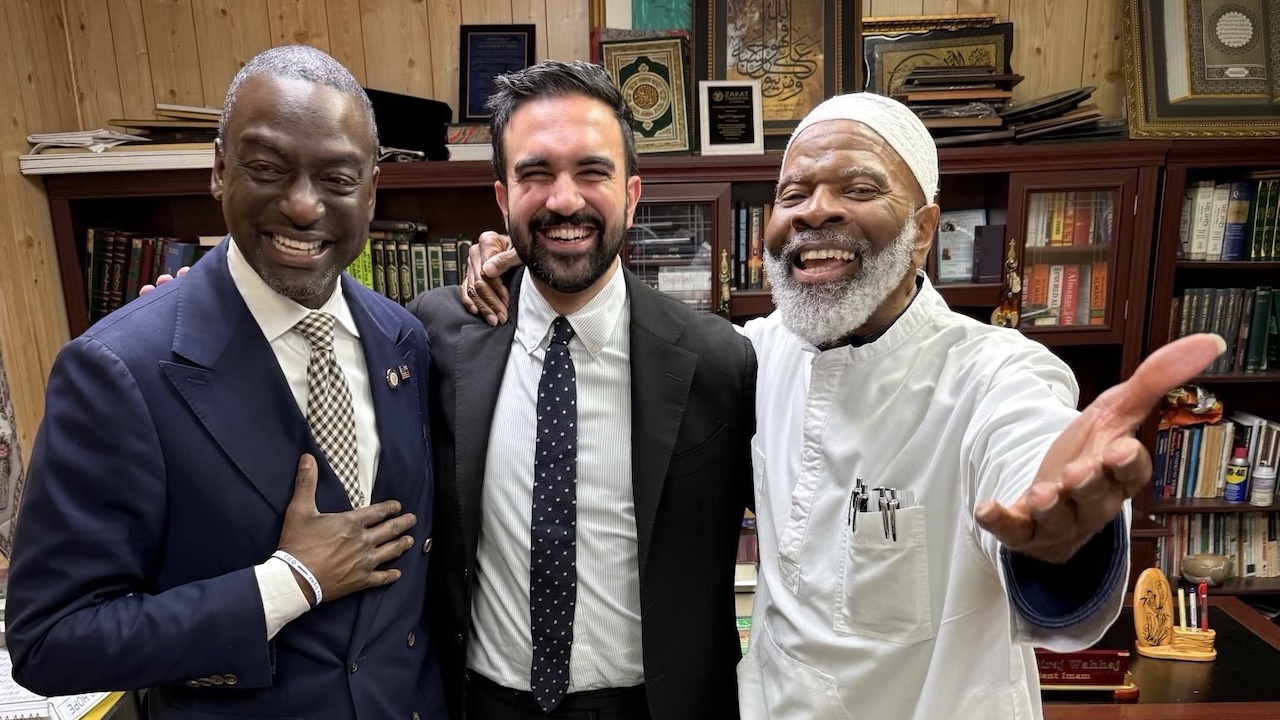
When New York mayoral candidate Zohran Mamdani took a photo with Imam Siraj Wahhaj and Dr. Yusef Salaam, many media outlets seized the opportunity to attack him. Mamdani responded by reminding them that Imam Siraj has worked with multiple New York mayors since 1993. But suddenly, when a Muslim candidate takes a photo, it becomes controversial. That is Islamophobia hiding in plain sight.
The outrage and attacks are because Mamdani is standing next to another Muslim man who is NOT charged with a crime. And they really … really want Imam Siraj to be charged with a crime. Perhaps in the same way, many people in New York wanted five Black boys to be guilty of a crime in 1989.
The Irony!!
Look closely at that photo. On Mamdani’s left stands Imam Siraj Wahhaj, a man who has never been charged with any crime but who continues to be treated as if he has. On Mamdani’s right stands Dr. Yusef Salaam, one of the Exonerated Five, who was charged and wrongly convicted of a crime he did not commit. Dr. Salaam spent years in prison before being cleared in 2002. It was a harrowing experience, vividly portrayed in the Netflix series When They See Us. The documentary reveals the injustices he and four other young men endured, exposing the systemic failures that led to their wrongful convictions.
Together, the two men beside Mamdani reveal a painful truth about America. Even when Black people and Muslim people are innocent, the system finds a way to criminalize them. Whether through false conviction or false accusation, the result is the same: dehumanization.
Who Imam Siraj Is To Me
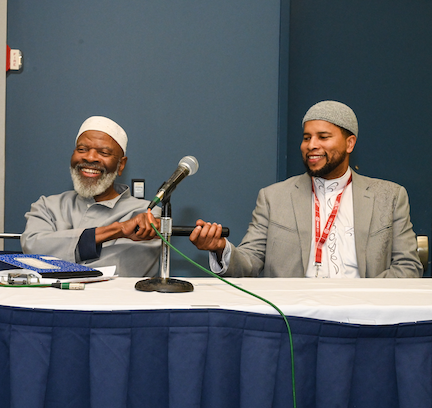
I met Imam Siraj when I was 12 years old, and he has inspired me to be a man of integrity ever since. He motivates people to do good in ways that few can, helping them believe they can make a difference no matter who they are or where they come from. I am proud that he calls Native Deen his favorite musical group, although maybe he says that to every artist to make us feel good. And, as the current President of MANA, I am honored to continue his legacy of bringing people together to strengthen the African American Muslim community.
Imam Siraj lifts people up. He makes them feel seen and empowered. His entire life has been dedicated to transforming his own neighborhood, from one filled with crime and despair, into a safe neighborhood filled with faith and economic vibrancy. That is the Imam Siraj I know. That is the Imam Siraj that millions around the world know.
A Picture That Speaks For All Of Us
At the end of this article, you will see a picture of me with Imam Siraj. And I encourage anyone who is proud of the work he has done for them personally, or for the global Muslim community, to post a picture they’ve taken with him as well. Let the world see who Imam Siraj Wahhaj is to us. Let the world see that he represents service and positive transformation. He does not represent the fear that others are trying to attach to him.
The Bigger Message
Our relationships with others do not mean we agree with all their religious opinions or political views. Imam Siraj and I disagree on many things. My mother and I disagree on many things. My sons and I disagree on many things. The Muslim community is diverse, and the American community is diverse. Now is the time for us to come together, not to be divided.
It is remarkable how selective the outrage of some media outlets can be. It communicates that certain people can be convicted felons and take pictures with convicted international sex traffickers and still become President of the United States. Meanwhile, others take a picture with two innocent men and are immediately treated as suspects. That is the hypocrisy we are witnessing.
Reflection
Mamdani’s campaign may focus on affordability, but this moment should remind New Yorkers of another kind of debt. Let’s consider the moral debt owed to those who have been vilified, caged, and slandered by the very systems meant to protect them.
If Mamdani becomes mayor, I hope he helps build a city where people are not jailed for crimes they did not commit and not condemned for crimes they were never even charged with.
And I hope we, as a society, can finally retire the lazy, racist use of the word “unindicted” when it serves no purpose but to feed fear.
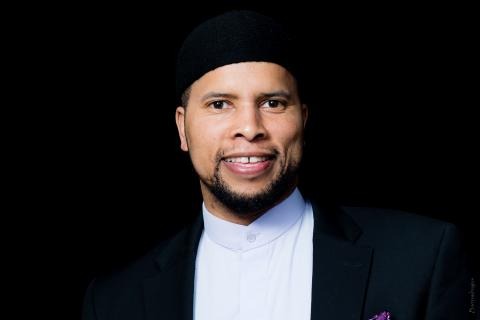
Joshua Salaam has strong roots in the American Muslim community. He started attending national Muslim youth camps at the age of 12 and continued as a participant, counselor and speaker for over 30 years. Joshua entered the U.S. Air Force in 1995 and served as a Police officer for four years. He was a key contributor in establishing Friday prayer services on base for Muslim military members and went on to serve as an Imam in Goldsboro, NC for several years. After the military, Joshua immersed himself in community activism. He managed the Civil Rights department for the Council on American-Islamic Relations from 2000-2004 and helped oversee a Baltimore Muslim community and neighborhood development project from 2004-2007. Before starting at Duke in July 2018, Joshua worked with youth and families for 11 years at one of the largest Muslim communities in America. His diverse background gives him a unique perspective on many issues and helps him connect with students. He holds a Master’s Degree in Religious Studies and a Doctorate of Ministry from Hartford Seminary. He is the current President of MANA’s Board of Directors.