Bismillah ar-Rahman ar-Raheem In the Name of Allah, the Most Merciful, the Most Compassionate
As-salāmu ʿalaykum wa rahmatullāhi wa barakātuh, dear sisters and brothers,
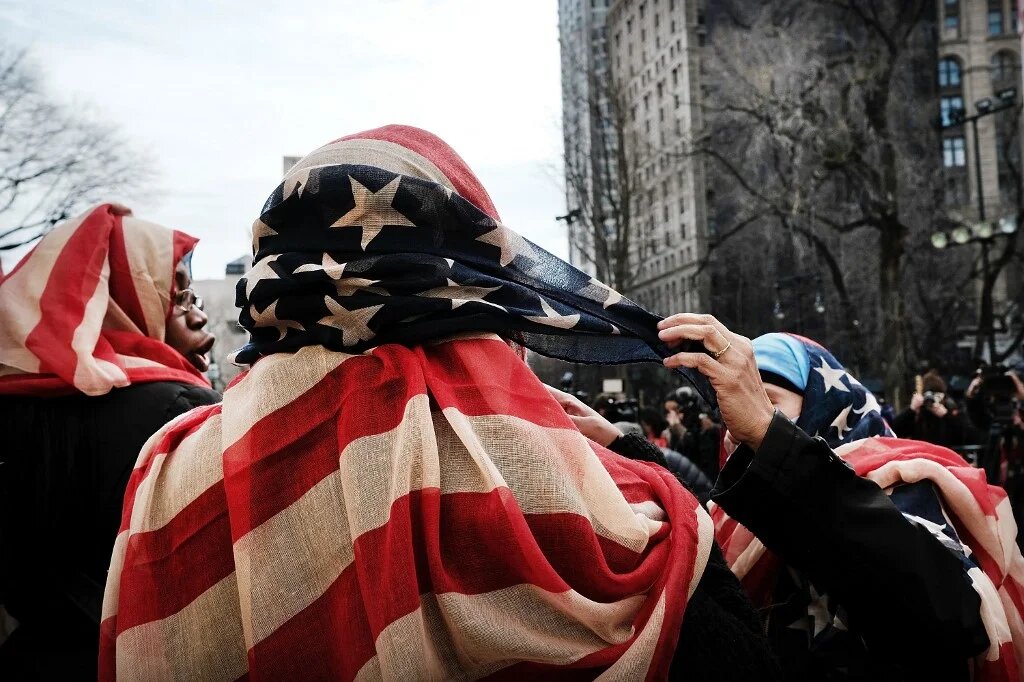
Tomorrow marks an important day in the civic life of many cities across the United States, including New York City — where crucial races, such as the mayoral election between Zohran Mamdani and Andrew Cuomo, will shape the future of housing, policing, education, healthcare access, and community investment. These issues deeply impact our neighborhoods, masājid, schools, businesses, and families.
For many in the Ummah, especially those who feel disillusioned by politics or disconnected from government processes, election season may feel distant or even uncomfortable. But should we vote? Does Islam encourage civic engagement? What role should we play in shaping the society around us — especially in a non-Muslim country?
Let us reflect together, heart and soul, through the lens of the Qur’an, Sunnah, and the lived experiences of our communities.
Islam & Civic Responsibility: A Matter of Amanah (Trust)
Allah says in the Qur’an:
“Indeed, Allah commands you to render trusts (amanāt) to whom they are due and when you judge between people to judge with justice…”
(Surah An-Nisa 4:58)
Voting — when done thoughtfully and with sincere intention — can be one way of fulfilling a trust (amanah) in a society where we are granted a voice in leadership and policy decisions. It is a mechanism by which we help “judge with justice,” even in a system that is imperfect.
Our votes are not endorsements of perfection — no candidate is flawless, and no system is free of injustice. But when we are presented with choices that will either harm or benefit the vulnerable, or protect or endanger our families, our masājid, our freedom to worship, and our access to safety, education, and health — then staying silent can itself become a form of passive harm.
The Prophet ﷺ & Participation in Society
The Prophet ﷺ lived for 13 years in Makkah under an unjust, polytheistic system. He called for justice, equity, and compassion. Even when he migrated to Madinah and led the first Islamic state, he entered into civic agreements with the Jews and other tribes — affirming that Muslims could live justly and cooperatively with others in society.
The Hilf al-Fudul — a pre-Islamic pact for justice and protection of the oppressed — was something the Prophet ﷺ later said he would still uphold, even after prophethood.
“I witnessed a pact in the house of Abdullah ibn Jud’an that I would not trade for red camels. And if I were called to it in Islam, I would respond.” (Musnad Ahmad – Sahih)
This shows us: standing for justice and joining collective efforts to prevent oppression is not only permissible, but praiseworthy, even in non-Muslim systems — when done with care and intention.
Voting in the West: A Tool, Not a Solution
We must be clear: voting is not our savior. Only Allah is Al-Hādī (The Guide) and Al-‘Adl (The Just). But in systems where decisions are made through elections, our votes become tools — not to dominate others, but to protect ourselves and serve the vulnerable.
Key local policies affect:
Surveillance and policing of Muslims
Zoning laws that allow or restrict masājid
School curricula, including Islamophobia education
Housing affordability and gentrification
Health care, elder services, and food access
Immigration and refugee services
Climate and clean air in our neighborhoods
So when we vote for school board members, district attorneys, council members, or mayors — we are making decisions that can bring harm or benefit to thousands. This is not a small matter.
“Whoever of you sees an evil, let him change it with his hand; if he cannot, then with his tongue; and if he cannot, then with his heart — and that is the weakest of faith.” (Sahih Muslim)
Let us not settle for the weakest of faith when Allah has given us stronger options. Voting is one way we speak with our tongues — and protect with our hands.
Tomorrow’s Vote: What’s at Stake
In New York City, the mayoral race between Zohran Mamdani — a progressive advocate for housing justice and police accountability — and Andrew Cuomo, the former governor with a long, controversial political legacy — reflects starkly different visions for the city’s future.
No candidate will ever be perfect. But when the choices are clear in terms of:
Impact on the poor and working class
Investment in communities of color
Protection of civil liberties and religious freedoms
Openness to the Muslim community’s needs and participation
Then we must weigh these consequences sincerely, and vote with tawakkul (trust in Allah) — not in the outcome, but in our duty to strive for good.
Spiritual Anchoring: Intention Before Action
Before stepping into the voting booth, make your niyyah (intention) clear:
Ya Allah, I vote seeking Your pleasure.
I vote to protect the oppressed, the hungry, the elderly, and the orphans.
I vote to preserve the ability to worship You freely.
I vote to contribute to a society where mercy, not greed, leads.
I vote with the full trust that only You, Al-Malik (The Sovereign), control the outcome.
“And consult with them in affairs. Then when you have decided, rely upon Allah. Indeed, Allah loves those who rely upon Him.”
(Surah Āli ‘Imrān 3:159)
A Healing Practice: Grounded Presence Before Voting
Before you cast your vote tomorrow, take a few minutes for this simple breath-and-du’a practice:
Breathing Du’a
Inhale: “Ya Raḥmān…”
Exhale: “…guide me to justice.”
Inhale: “Ya Ḥakīm…”
Exhale: “…grant me wisdom in this decision.”
Let your vote be grounded, not rushed. Reflect, pray, then act.
Final Reflections
Heart-Opening Question: What would it mean to treat your vote not just as a right — but as a sacred trust between you and Allah?
Stay tuned for more from MANA about civic engagement, inshaAllah.
Akanke is a communications specialist and consultant with a degree in Communication from Georgia State University, focused on film, TV, and cultural anthropology. Her career is diverse, and her interests span various creative forms of expression — from producing TV and radio shows to creating documentaries, writing, graphic design, and life coaching, she strives to make a lasting and authentic impact wherever she goes. She reverted to Islam in 1994 and is passionate about Islam and Islamic spirituality, a passion that runs through nearly every corner of her work. Akanke has been a dedicated supporter of the Muslim Alliance in North America (MANA) since 2007, currently serving as the organization’s Board Vice President — working alongside the Board President and Secretary to help shape MANA’s trajectory — and previously served for several years as its Communications Director. A native of Atlanta, she now resides in Dayton, Ohio.