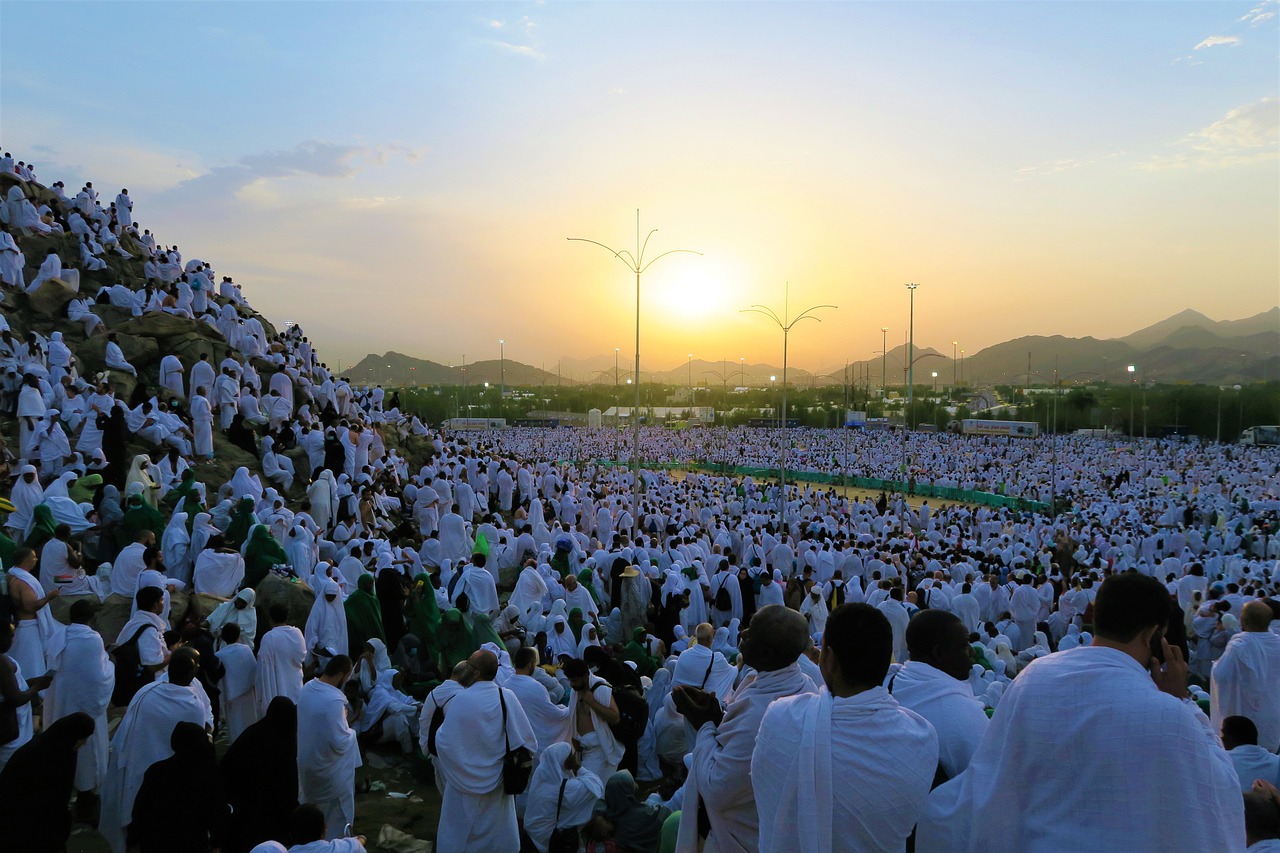
As the golden sun rises and sets over the plains of Arafah today, Muslims worldwide stand at the threshold of one of Islam’s most sacred moments. The Day of Arafah isn’t merely a date on the calendar, it is a divine invitation to spiritual transformation that echoes across centuries.
The term “Arafah” comes from the Arabic root “Arafa,” which translates to “to know” or “to recognize.” The plain was named Arafah because it is believed to be the place where Adam and Eve acknowledged each other after their separation due to their expulsion from Paradise. In Islamic tradition, the Day of Arafah emphasizes knowledge, awareness of one’s wrongdoings, and the pursuit of forgiveness from Allah (SWT). It serves as a moment to reflect on one’s relationship with the Creator and to reaffirm one’s commitment to living a righteous life.
Where Heaven Meets Earth
The 9th day of Dhul-Hijjah marks the climax of Hajj, when over two million pilgrims gather on the Mount of Mercy (Jabal al-Rahmah). Here, they embody the Prophet Muhammad’s (PBUH) farewell sermon, standing in humble submission from dawn until sunset. This ritual—Wuquf—is the cornerstone without which Hajj remains incomplete.
A Universal Gift
While pilgrims stand at Arafah, this day extends its grace to every believer:
- Fasting: For non-pilgrims, fasting expiates sins of two years; the past year as well as the upcoming year. (Hadith, Muslim).
- Forgiveness: Allah descends to the nearest heaven, proclaiming: “Look at My servants who have come disheveled and dusty! I bear witness that I have forgiven them” (Musnad Ahmad).
- Supplications: Duas made this day are among the most assured of acceptance. The Prophet (PBUH) called it the best day for supplication (Tirmidhi). Make abundant heartfelt duas for yourselves, your family, and the Muslim ummah. Ask Allah to forgive our sins, fulfill our needs, and allow us to become closer to Him.
- Dhikr: It is also sunnah to recite the Tahleel (Laa ilaaha il-lal-laah), Takbeer (Allahu Akbar) and Tahmeed (Alhamdulillaah) frequently on the Day of ‘Arafah, and on the days of Eid – 11th, 12th and 13th of Dhul Hijjah.
Eternal Echoes
Arafah holds significant historical importance:
- The complete message of Islam was revealed here (Quran 5:3).
- Adam and Eve’s repentance was accepted on this plain after their earthly descent.
- Ibrahim (AS) received revelations here prior to the Kaabah’s construction.ion.
Seizing the Moment
How to honor this day wherever you are:
- Fast until sunset (for non-pilgrims)
- Recite: Multiply dhikr with “Lā ilāha illallāhu waḥdahu lā sharīka lahu…”
- Pray: Pour your heart into du’a—especially in the final hour before Maghrib
- Give: Increase sadaqah in honor of pilgrims’ sacrifices
As the sun sets on Arafah, let’s carry its light forward. Today isn’t an endpoint but a portal—a reminder that Allah’s mercy always outshines our shortcomings. May our standing in prayer, whether at Arafah or in our homes, weave us into the eternal tapestry of divine grace.
“There is no day on which Allah frees more people from the Fire than the Day of Arafah.”
— Prophet Muhammad (PBUH), Sahih Muslim