Prelude
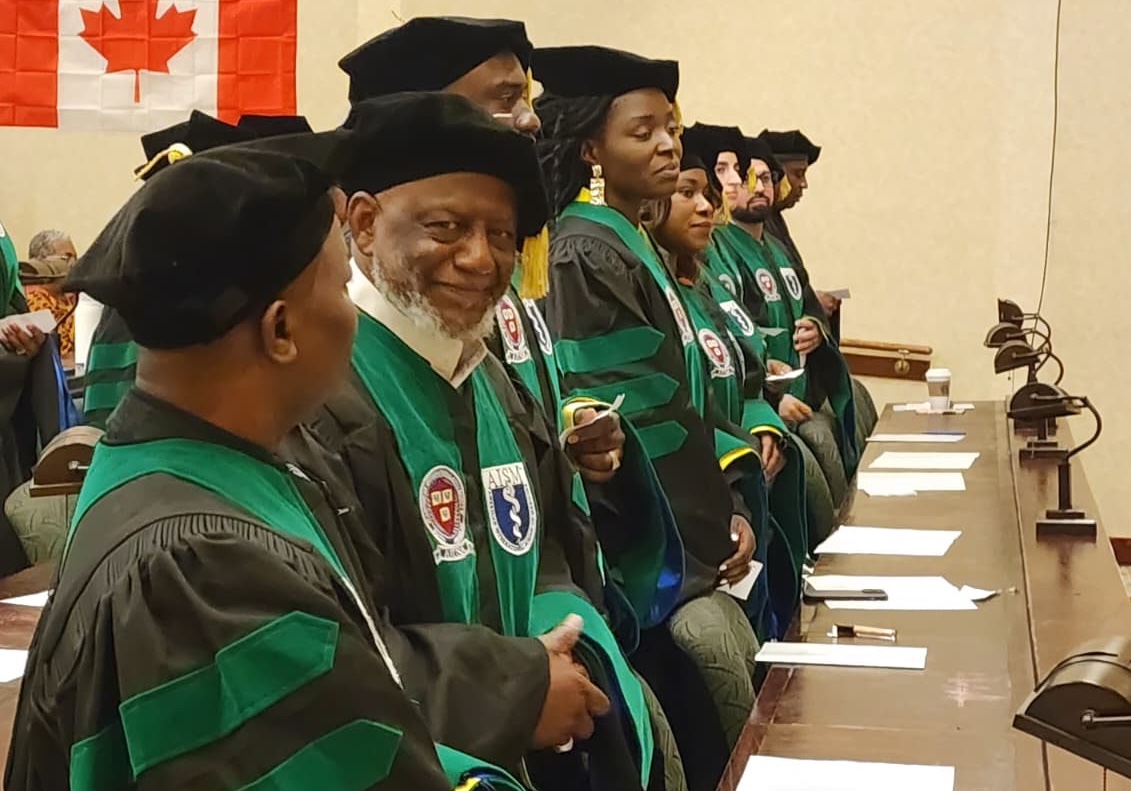
In Part 1, we explored the inspiring journey of Dr. Ishaq Majeed, who achieved his dream of earning a medical degree at the age of 75. His story is one of extraordinary perseverance, overcoming the injustice that disrupted his medical studies in the 1980s, enduring decades of legal battles, surviving two near-fatal heart attacks, and ultimately celebrating his hard-earned Doctor of Medicine degree. Dr. Majeed’s journey is a powerful testament to the enduring strength of faith and determination in overcoming life’s greatest challenges.
In this second installment, we step back in time to explore the foundation of that resilience — the soldier, the scientist, and the teacher whose discipline, intellect, and faith would become the pillars of his life’s purpose.
“Indeed, Allah loves those who act with excellence (ihsān).”
— Surah Al-Baqarah, 2:195
Dr. Ishaq Majeed’s journey is not only defined by his historic medical degree at seventy-five years old but by the decades of service, sacrifice, and soulful endurance that made such a triumph possible. In this second installment, we step back from the courtroom and clinical struggles to look at another powerful dimension of his story: his role as a soldier, educator, and seeker of divine truth. His life is a testament to ihsān — acting with excellence for the sake of Allah alone.
From Green Beret to Medicine
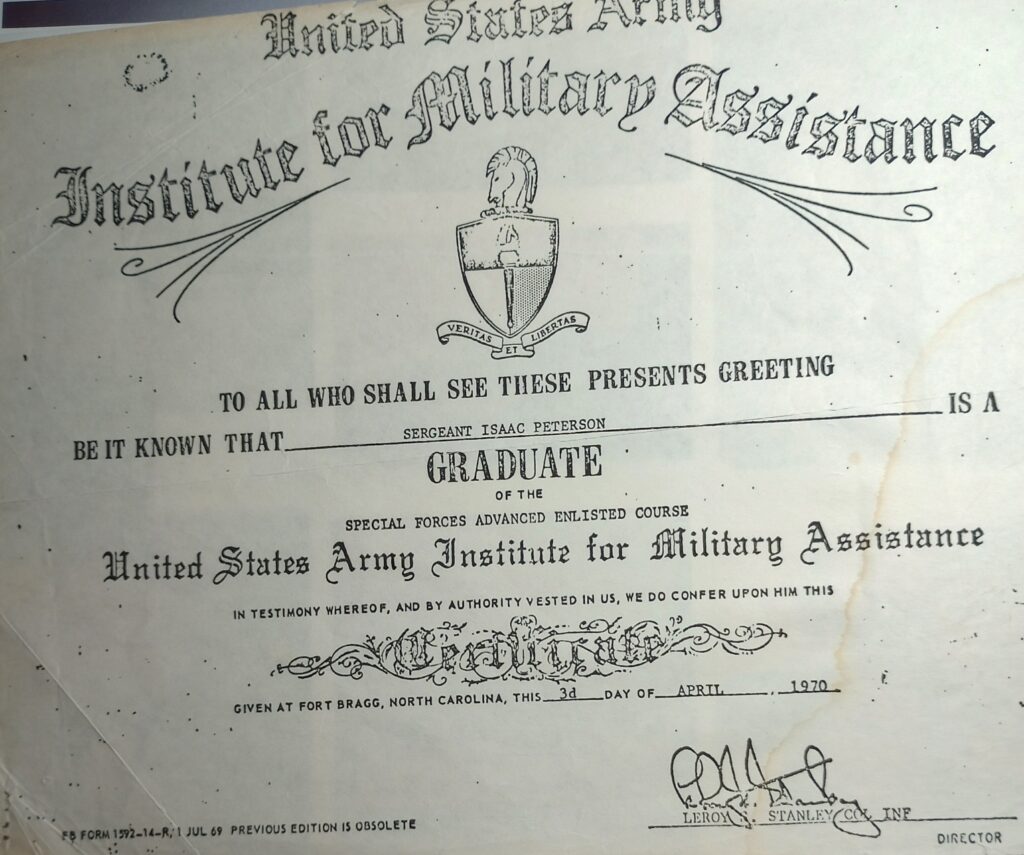
Before Dr. Majeed ever entered medical school, he served as a combat medic in the U.S. Army Green Berets, where he developed the discipline, trauma-care skills, and strategic mindset that would stay with him for life. “I’ve been in the medical field since 1968,” he shared. “Even in high school, I worked in a hospital.”
After the military, he earned a chemistry degree, passed the state exam to become a licensed nurse without even attending nursing school (because of his vast medical experience), and went on to work as a scientist. He brought all of that experience into his medical studies, only to face institutional racism that threatened to bury a lifetime of excellence.
But as Dr. Majeed would later teach his students: “You can’t bury light.”
The Mohammed Schools Years
When the doors of medicine temporarily closed, another calling opened — one that would shape a generation.
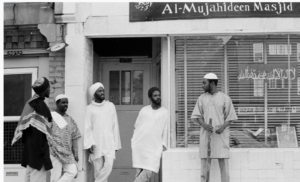
It was Imam Plemon El-Amin who first encouraged Dr. Majeed to teach at Mohammed Schools of Atlanta. Dr. Majeed “He told me, ‘Man, you’ve got all this knowledge, and I’ve got people trying to teach who don’t even have degrees!’” Dr. Majeed recalled him lamenting.
What began as a temporary teaching role became a twenty-year commitment to nurturing young Muslim minds. He taught chemistry, biology, physical science, and health — often crafting the curriculum himself. “Students used to complain I was teaching them on a college level,” he laughed. “But many of them went on to become doctors, nurse practitioners, and lawyers.”

Imam Plemon El Amin, who has known Dr. Majeed for five decades, shared reflections on Dr. Majeed’s extraordinary journey through medical school at Morehouse and the racism and discrimination he faced at Emory. He recalled Dr. Majeed’s unwavering commitment, stating, “The main thing was he never gave up. He was persistent, and he stuck with it all the way through.” Despite facing serious challenges, including discrimination at Emory, “it wasn’t stuff just in his head, it was, it was real,” Imam Plemon emphasized.
Throughout these obstacles, Dr. Majeed remained deeply involved in the community and played a vital role at the school, both as a teacher. “He really helped strengthen the students in our science program at the school. He was a great mentor to young people,” Imam Plemon recalled. He said Majeed’s children, who, despite adversity, “always respected the religion and always respected their dad and his efforts.” Dr. Majeed is remembered as “very scholarly, very observant,” and as a man of strong faith whose contributions have left a lasting impact on those around him.
Despite burnout, long nights of grading and preparation, and personal hardship, he honored a sacred promise: to serve the ummah through knowledge. “Every time I thought about quitting,” he said, “I felt a tremor. Because I had promised Allah I would do this.”
Dr. Majeed’s classrooms were never ordinary. He introduced Qur’anic āyāt alongside biology lessons, using Allah’s signs in creation as a means to teach and inspire. He reminded his students: “Studying medicine is studying Allah’s creation. This knowledge isn’t secular — it’s sacred.”
Legacy Through Teaching
Dr. Majeed’s teaching left deep spiritual and intellectual imprints. Former students still seek him out years later, calling him “a master teacher” and “a father figure.” He used education not just to convey facts — but to elevate self-worth, faith, and vision.
Imam Plemon El-Amin, who first encouraged Dr. Majeed to teach at Mohammed Schools of Atlanta, reflected on the depth of his impact. “The only complaint the students would have,” he said warmly, “is that he was too hard—it was too complicated, too difficult.” But that rigor, the Imam emphasized, was precisely what made Dr. Majeed’s teaching so transformative. “It really helped strengthen the students in our science program,” he said. “Many of them went on to become doctors, lawyers, and other professionals. They did well.”
I also spoke with his only daughter, Nadiyah, who offered a unique perspective as both his child and one of his students. She fondly reflected on the joy—and the challenge—of being in her father’s classroom. “His classes were incredibly tough—really tough,” she admitted. What resonated with her most, however, was her father’s unwavering compassion. She witnessed his deep commitment to his students’ success. “He would stay after school to tutor us for two hours, more than once a week,” she shared. “He was determined to ensure every student had the opportunity to understand and excel.”
For many young Black Muslim boys, especially, Dr. Majeed was the first educator to affirm their brilliance and challenge them to strive for greatness. “I wanted to be an example,” he said. “Especially for our Black male kids. Let them see someone who never gave up.”
Today, Dr. Majeed envisions a formal pipeline between the American International School of Medicine and the Muslim community, particularly for high-achieving youth from underserved backgrounds. “Our students are brilliant,” he said. “They just need a way in. I want to help build that bridge.”
Redemption Through Reflection
By the time Dr. Majeed crossed the stage with his long-awaited medical degree, he had already lived a life worthy of volumes. And now, in the stillness that comes after long struggle, a new purpose is unfolding — to write, reflect, and ensure that the truth of his life is not only remembered but recorded.
For years, he dreamed of writing a book — not just a memoir, but a work that weaves together his spiritual insight, scientific understanding, and lived experiences of injustice and divine mercy. The working title: Medicine, Religion, and These Bodies We Wear. “So much of the Qur’an hits you while studying medicine,” he said. “You’re looking into Allah’s creation. You begin to see how the body is a divine trust.”
He speaks not with bitterness, but with clarity — a quiet assurance born of truth hard-won. “People tried to erase me,” he said, “but Allah didn’t allow it.” Alhamdulillah.
In his archives are sealed court records, grade reports, and newspaper clippings from figures like Carl Rowan and Bernice King — evidence of the racism he endured, but also of the resilience that refused to die. “The world doesn’t need another polished biography,” he said. “It needs the raw truth — so our children can recognize injustice and rise above it.”
Lessons in Faith and Fortitude
Dr. Majeed’s reflections reveal a man who has come to see his life as a series of lessons — āyāt — of Allah’s subtle mercy. “I was up all night — working on cases, writing arguments, filing motions — and still had to teach, still had to parent. You wake up crying, but you keep going.”
To him, this is not suffering — it is growth. Growth through faith, discipline, and patience. The fortitude he developed in the military, the compassion he cultivated as a teacher, and the conviction he carried as a believer all merged into one continuous act of worship.
Each test became a classroom, each setback a curriculum in surrender and steadfastness. Through it all, Dr. Majeed emerged not as a man broken by hardship, but as one refined by it — living proof that true strength lies not only in resistance, but in remembrance.
His life had become a continuous act of teaching — not only in classrooms, but through his example of patience, discipline, and faith. Each hardship became a lesson to pass on; each victory, a reminder of Allah’s promise. And as one chapter of struggle began to close, another opened — one defined not by pain, but by purpose.
Now, nearing seventy-six, Dr. Majeed doesn’t speak of retirement. He speaks of completion: publishing his writings, mentoring young Muslims, traveling to inspire students, and fulfilling the educational pipeline he once envisioned. “I’m not trying to be famous,” he said. “I’m trying to be faithful. That’s it.”
Legacy in Bloom
Dr. Majeed’s story reminds us that the end of one battle often marks the beginning of something more profound — something deeper—a reclamation of voice, dreams, and purpose. His life urges us to examine our own unfinished aspirations, to keep going where we once stopped, and to trust that Allah’s timing never fails. As a devoted believer, he places his faith in Allah’s plan. In a recent conversation, he shared his gratitude for having the opportunity to spend more time raising his children—precious moments he acknowledges would have been lost had he been fully immersed in the demanding life of a practicing medical doctor during their formative years. “Allah guides us by our faith,” he said. “If we keep going in the Faith.”
May Allah, Al-‘Alīm (The All-Knowing) and Al-Hafīz (The Preserver), bless Dr. Majeed’s continued journey, expand his legacy, and make his story a source of light for generations to come. Āmīn.
As the chapter of struggle gave way to renewal, Dr. Majeed turned his focus from survival to service. The same discipline that once steadied him as a soldier, and the same resilience that carried him through decades of injustice, now found new expression in teaching, mentoring, and advocacy. In the classroom, he discovered a place where knowledge could heal, faith could inspire, and his life’s trials could become lessons of hope for others.
Heart Reflection:
If you were to write the truth of your life — not the polished version, but the raw, redemptive truth — what story would you begin with?

Akanke is a native of Atlanta who now resides in Dayton, Ohio. She reverted to Islam in 1994 and is passionate about Islam and Islamic spirituality. Akanke is a graduate of Georgia State University, where she earned a degree in Communication, with a focus on film, TV, and cultural anthropology. Her career is diverse, and her interests span various creative forms of expression. From producing TV and radio shows to creating documentaries, writing, graphic design, and life coaching, she strives to make a lasting and authentic impact wherever she goes. Akanke has been a dedicated supporter of MANA since 2007, currently serving as the organization’s Board Vice President. In this role, she plays a key part in working with the Board President and Secretary to shape the organization’s trajectory. Additionally, she serves as MANA’s part-time Communications Director.