The Echo of Emancipation
On June 19, 1865—two and a half years after the Emancipation Proclamation—Union soldiers arrived in Galveston, Texas, to announce the end of slavery. This moment, now commemorated as Juneteenth, represents not just legal freedom but the beginning of a continuous struggle for true liberation. For Black American Muslims, this day holds profound spiritual and cultural significance, weaving together African heritage, Islamic faith, and the Black freedom struggle.
Unbroken Chains: The Texas Delay
The delayed enforcement of emancipation in Texas reveals a painful truth: freedom granted on paper doesn’t automatically translate to freedom lived. As enslaved Africans in Texas continued laboring unaware of their legal status, their experience mirrors the spiritual concept of ghafil (heedlessness) in Islam—being unaware of one’s true state of liberation. This historical gap between decree and reality reflects the ongoing journey from theoretical rights to lived justice.
At the Intersection: Black, Muslim, American
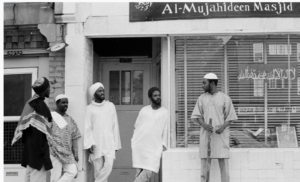
Black Muslims have existed in America since transatlantic slavery, with historians estimating 15-30% of enslaved Africans were Muslim. Figures like Ayuba Suleiman Diallo and Omar Ibn Said maintained their faith despite enslavement. Today, approximately 1 million Black Muslims navigate a unique triple consciousness:
- African cultural heritage
- Islamic spiritual identity
- American civic reality
Juneteenth becomes a sacred convergence point where these identities meet, recalling Prophet Muhammad’s teaching: “Help your brother whether he is oppressed or oppressing” (Sahih Bukhari). For Black Muslims, this includes addressing both external racism and internal community healing.
Theological Foundations: Islam’s Liberation Legacy
The Quran explicitly condemns oppression [Surah An-Nisa 4:75]:
“Why should you not fight in the cause of God when weak men, women, and children cry out: ‘Our Lord, deliver us from this land of oppressors?'”
The Quran emphasizes the importance of standing against injustice and supporting the oppressed. It calls upon believers to act with courage and compassion, defending those who are vulnerable and suffering under tyranny. This verse serves as a powerful reminder of the responsibility to uphold justice and ensure the dignity and rights of all individuals, regardless of their circumstances. Juneteenth celebrations often incorporate:
- Special Du’as: Prayers for ancestors and future generations
- Zakat Calculations: Including reparations advocacy as modern sadaqah (charity)
- Sermons on Surah Al-Hujurat: Emphasizing racial equality before God
Contemporary Observances: Faith in Action
Muslims of all ethnicities can enrich Juneteenth with faith-centered practices:
- Educational Khutbahs & Panel Discussions: Mosques hosting lectures on Black Muslim history
- Interfaith Solidarity: Partnering with local faith organizations
- Cultural Events: Films, Art exhibits, Nasheed performances.
The Unfinished Liberation
As we celebrate Juneteenth in 2025—160 years after Galveston—Black American Muslims continue embodying what scholar Dr. Sherman Jackson calls “Blackamerican Islam”: a faith that simultaneously roots itself in divine revelation while confronting America’s racial contradictions. This day reminds us that true freedom requires both external emancipation and internal transformation—a concept Muslims understand as the journey from nafs al-ammarah (the soul commanding evil) to nafs al-mutma’inaah (the soul at peace).
Juneteenth ultimately stands as a testament to resilience—a quality Black Muslims have historically manifested through figures from Bilali Muhammad (enslaved Muslim who documented Islamic jurisprudence) to Muhammad Ali (who linked racial justice to spiritual integrity). Their legacy challenges all Americans to build a nation where freedom isn’t merely proclaimed, but practiced—for as the Quran teaches, “God does not change the condition of a people until they change what is in themselves” [Surah Ar-Ra’d 13:11].

Akanke is a native of Atlanta who now resides in Dayton, Ohio. She reverted to Islam in 1994 and is passionate about Islam and Islamic spirituality. Akanke is a graduate of Georgia State University, where she earned a degree in Communication, with a focus on film, TV, and cultural anthropology. Her career is diverse, and her interests span various creative forms of expression. From producing TV and radio shows to creating documentaries, writing, graphic design, and life coaching, she strives to make a lasting and authentic impact wherever she goes. Akanke has been a dedicated supporter of MANA since 2007, currently serving as the organization’s Board Vice President. In this role, she plays a key part in working with the Board President and Secretary to shape the organization’s trajectory. Additionally, she serves as MANA’s part-time Communications Director.