My road to Qawamun started in Houston earlier this year, where Imam Wazir invited a group of African American imams and community leaders for his annual Black History Month programming. In the middle of that trip, Imam Saafir Rabb from Baltimore pulled a bunch of us together for lunch, where the conversation began with casual introductions and ended like a family conversation. That is where I met Jihad Mustafa from Oakland. He told me about a camp he runs for boys and young men, almost one hundred strong, where they learn brotherhood and nurture an environment to build emotionally healthy men. As president of MANA, I had heard of Jawala Scouts, SAVE Institute, Kamp Khalil, and several other youth programs designed for Black youth, but Qawamun was new to me. MANA approved my trip, so I could learn more about this new program and help grow our network.
In Houston, Jihad and I clicked right away. We both have military backgrounds, and for years, I leaned on that experience as a youth director. I always dreamed of a Muslim-friendly camp that could build discipline and structure while maintaining a loving environment through the Prophetic model. Jihad and Imam Rashad were already three years into developing something similar. I was honored to be part of the fourth annual Qawamun Retreat.
I landed in the early hours and met the organizers at the masjid for Fajr. A few of the brothers looked like they were already in expedition mode. After prayer, the parking lot turned into a pop-up family reunion. Parents dropping off sons. Hugs and jokes. Stories from past years. Debates about politics and current events. I even ran into Brother Musa from my Baltimore days, who serves as the mayor’s liaison to the Muslim community. We loaded youth, packed food, checked the lists twice, and rolled out to Half Moon Bay, about an hour from Oakland, where a Muslim-owned property has hosted Qawamun for two years.
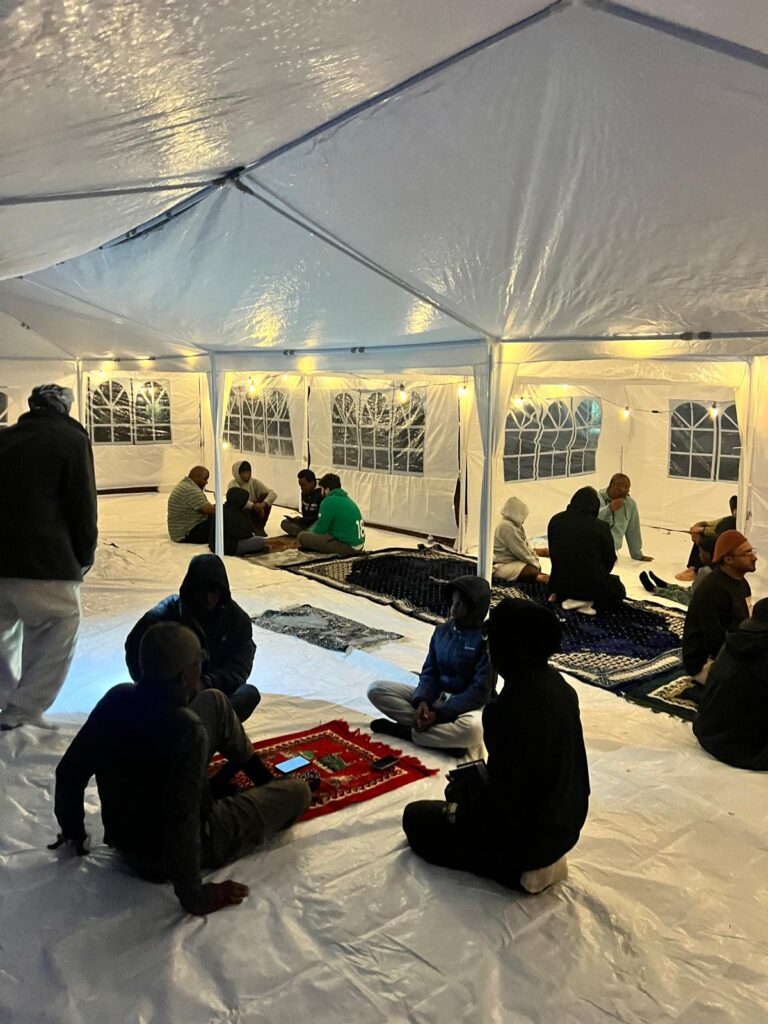
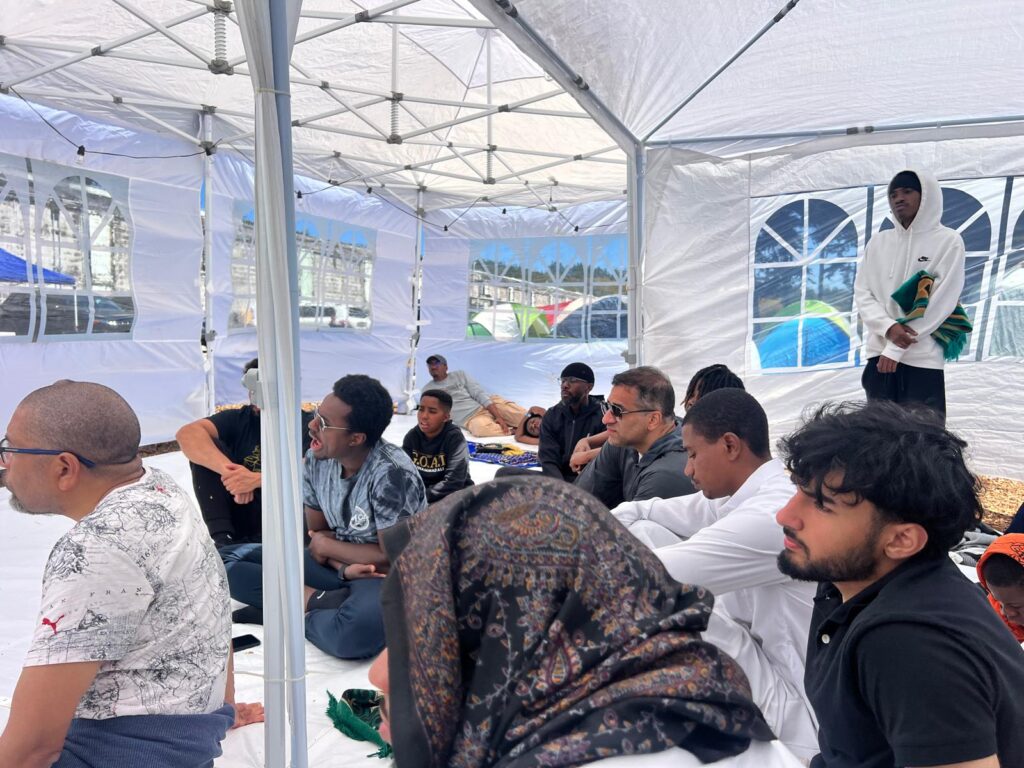
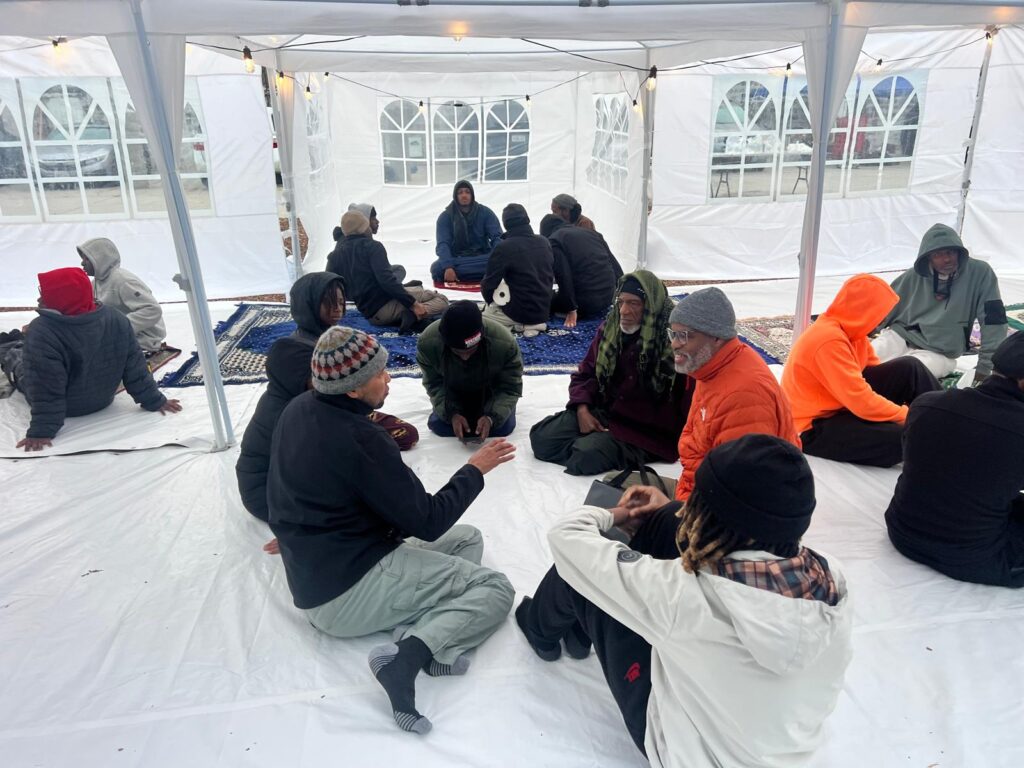
As soon as we arrived, everyone had a job. Jihad kept the vision, and the rest of us built a small village. We smoothed the ground and picked twigs from the spot that would become the masjid. The prayer space was a cluster of white tents of different sizes, some with plastic windows, all tied together like a single house. While the masjid was being built, others laid out the tent neighborhood where we would live. It felt like a tiny hijrah. Mecca behind us, Medina ahead, and a community coming to life around prayer.
Musa and I have each run camps for years. He led a family camp for about fifteen years with two hundred attendees. I led a spring youth camp for a decade with one hundred fifty youth. So we did not wait for instructions. We observed, saw where help was needed, and jumped in. Musa became the temporary cook since the chef would not arrive until the next day. I was able to do what I love: assisting everyone. I helped with the masjid. I helped the neighborhood tent engineers. I helped Musa in the kitchen and discovered the noble art of being the dishwasher. I fell in love with the camp and the Qawamun system. There’s just something about working on a short project together and seeing the fruits of your labor the same day. You taste the wisdom of that old saying: “Many hands make light work.”
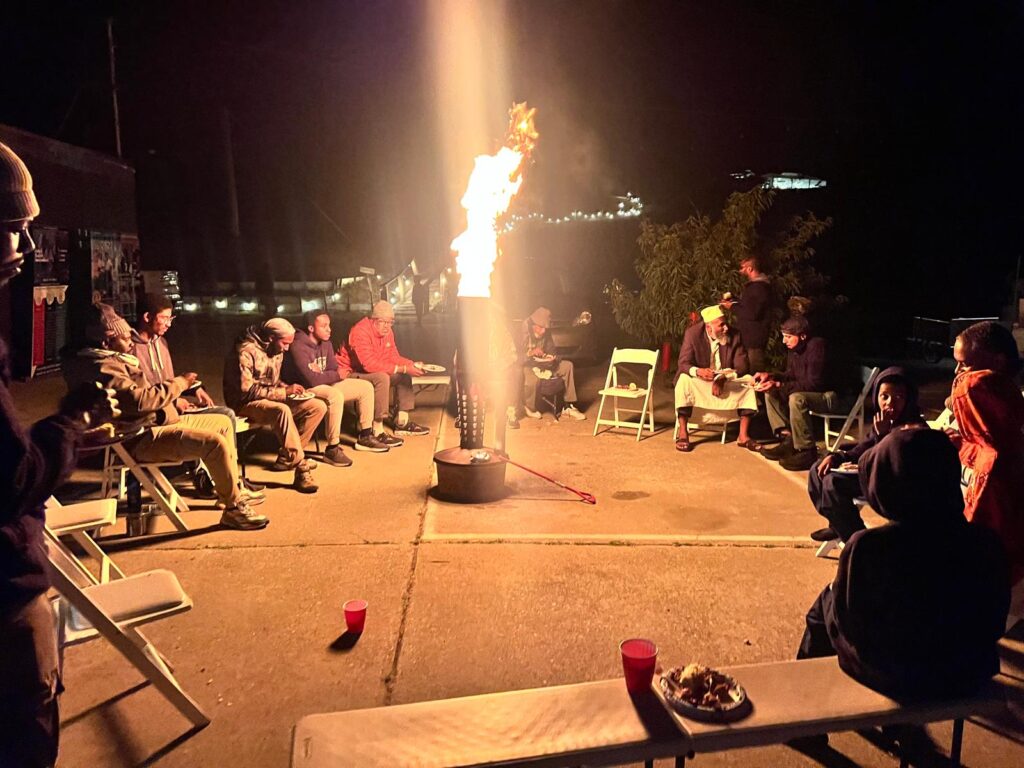
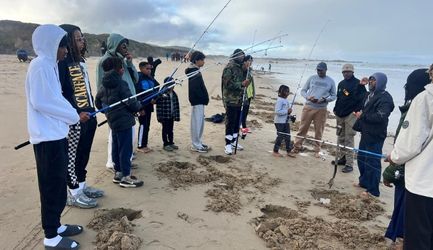
Then camp life took over. We ate and prayed and cleaned. We wrestled. We boxed. We went fishing. We slaughtered a lamb. We cooked. We learned tajwīd. We heard career journeys and steps to financial security. We mentored and got mentored. If a boy was very young, his father or a male guardian came with him. The mentoring was organic and constant. You could feel it at the water coolers, in the lines for food, on the trail, and under the stars. The group was primarily African American, and also included brothers from Thailand, Palestine, Egypt, White American families, Samoan families, and more. Different stories, one fire.
And then the chef arrived. No shade to Musa, because he held us down on day one, but once the chef took over, I felt like I left Medina on a miraculous night ride and ascended to the heavens from Jerusalem. I am telling you, this brother could cook. Masha Allah. I think some of the regular Qawamun campers come for the food alone. I kept my post in the kitchen as a full-time dishwasher and cleaner, so I could learn as much as possible.
The days of camp flew by, and the departure was the kind of goodbye that makes anyone who has been to a youth camp feel nostalgic. Emotional goodbyes. Long hugs. Unnecessarily hard daps that sting the hand, expressing love and a desire to meet again. Before I left, I offered two things back to Qawamun. First, pulling from the military and from my Native Deen years, I proposed setting the duah they recited after every prayer to a marching cadence, so the boys could feel it in their steps: “Surely my prayer, my sacrifice, my life and my death are for Allah, Lord of the Worlds. He has no partner. So I am commanded to be the first to submit.” Qur’an 6:162–163. Second, I committed to sit with Jihad and the team to brainstorm from our collective experiences, so we can keep building what they have started.
For me, this trip was the MANA network breathing. It jumped from a database of names into real handshakes, real tents, real meals, real mentoring. It reminded me why we do this work at MANA. I pray that we continue to fulfill our mission to grow and maintain a broad-based alliance of Muslims who strengthen African American Muslim communities and institutions. And I pray that Qawamun continues to transform lives and to live out its promise: building men, one boy at a time.