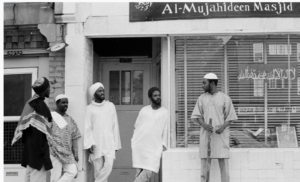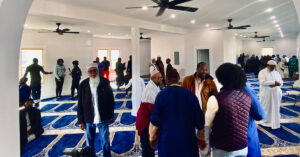

For the past three years, I have been living in Trotwood, Ohio, near Dayton. One of my priorities wherever I reside is to cultivate meaningful connections within the local Muslim community. While I often attend Jummah prayers at various mosques in the area, I am still searching for one that truly feels like home. Yesterday, however, I chose to stay in and participate in Jummah online. I revisited the online archives of Friday khutbah recordings from my beloved hometown masjid, The Atlanta Masjid of Al-Islam, where I embraced Islam more than 30 years ago. Renowned for its vibrant and dynamic community, the masjid is guided by the leadership of Imam Sulaimaan Hamed.
I decided to watch the khutbah streamed live on August 22, 2025, delivered by Imam Tariq Najee-Ullah. His sermon, titled “The Promise of Allah is True: Are We True to Allah’s Promise,” was profoundly thought-provoking and strikingly relevant. Imam Tariq reflected on the story of Prophet Noah, whose son tragically ignored his father’s warnings and perished in the flood. He drew parallels between that narrative and the distractions of modern life, urging us to safeguard our faith and lives by metaphorically building an ark.“I’m telling you, brothers and sisters, the flood is here again,” Imam Tariq warned. “It may not be water this time, but it’s drowning us all the same. We live in a flood of passions and desires, emotions, rage, no fear of Allah, no morals, no discipline. It’s a flood of illicit desires and excess in every imaginable form. That’s the flood we face—a flood of technology and distraction. We’ve got artificial intelligence, social media devices. We worship the device. We’re in this position of prayer all day long, staring at a screen.”
His words struck a profound chord, offering a compelling reminder of the struggles we encounter in remaining steadfast and connected to our faith amid the relentless distractions of modern life. Using my Otter app, I’ve compiled a summary of his khutbah, key insights, and included a link to the YouTube video.
The distractions he mentioned are summarized as:
- Excessive passions and desires, such as the pursuit of pleasure, entertainment, and material things.
- The pervasive influence of technology, especially social media and devices, which people often treat with the same attention as worship.
- Constant entertainment and a culture of instant gratification, where people expect to get what they want immediately.
- A lack of time for silence, reflection, and remembrance of God, as people are constantly bombarded by sensory input.
- The normalization of obscene speech, disrespect for elders and oneself, and increasing violence and bloodshed without meaning.
- Addictions to devices and false realities, leading to broken families and a sense of false intimacy.
- The spread of false spiritualities and beliefs that mix truth with falsehood, further distracting people from genuine faith.
He emphasized that these distractions are as dangerous as the flood in the story of Noah, warning that without building an “ark” of faith, discipline, and community, people risk being swept away by them.
To build the “Ark” of faith and discipline in your life, he invited us to do the following:
- Strengthen Your Faith (Iman): Deepen your belief in God and His promises. Regularly reflect on spiritual teachings and seek understanding beyond surface-level stories.
- Establish Consistent Prayer (Salah): Make daily prayers a foundation of your routine. Prayer is described as a pillar that keeps you connected to God and grounded in discipline.
- Practice Charity (Zakah): Give regularly to those in need and support community institutions. Charity purifies wealth and strengthens communal bonds.
- Engage in Fasting: Fast not only during Ramadan but also on other recommended days (e.g., Mondays, Thursdays, white nights). Fasting builds self-control and spiritual awareness.
- Participate in Community Life: Be active in your local mosque, school, or community organizations. The Ark is built collectively—your involvement helps sustain and grow these institutions.
- Support and Build Institutions: Contribute your skills, business, and resources to support educational, cultural, and economic initiatives. Organize with others to create lasting community endowments and support systems.
- Develop Personal and Family Strength: Focus on building your own character and that of your family. Strong individuals and families create a resilient community.
- Pursue Knowledge and Creativity: Engage in education, business, culture, and civic life with faith-driven purpose. These are the “four birds” that revive and sustain a community.
- Practice Self-Discipline and Avoid Distractions: Limit time spent on devices and entertainment that distract from spiritual growth. Make time for silence, reflection, and remembrance of God.
- Be Grateful and Obedient: Respond to God’s guidance with gratitude and action, not just words. Avoid the mistake of being close to the message but failing to act on it.
By taking these steps, we help build the Ark in our own lives—creating a foundation of faith, discipline, and community that can withstand the “floods” of modern challenges.
May Allah give us success. Ameen!

Akanke is a native of Atlanta who now resides in Dayton, Ohio. She reverted to Islam in 1994 and is passionate about Islam and Islamic spirituality. Akanke is a graduate of Georgia State University, where she earned a degree in Communication, with a focus on film, TV, and cultural anthropology. Her career is diverse, and her interests span various creative forms of expression. From producing TV and radio shows to creating documentaries, writing, graphic design, and life coaching, she strives to make a lasting and authentic impact wherever she goes. Akanke has been a dedicated supporter of MANA since 2007, currently serving as the organization’s Board Vice President. In this role, she plays a key part in working with the Board President and Secretary to shape the organization’s trajectory. Additionally, she serves as MANA’s part-time Communications Director.