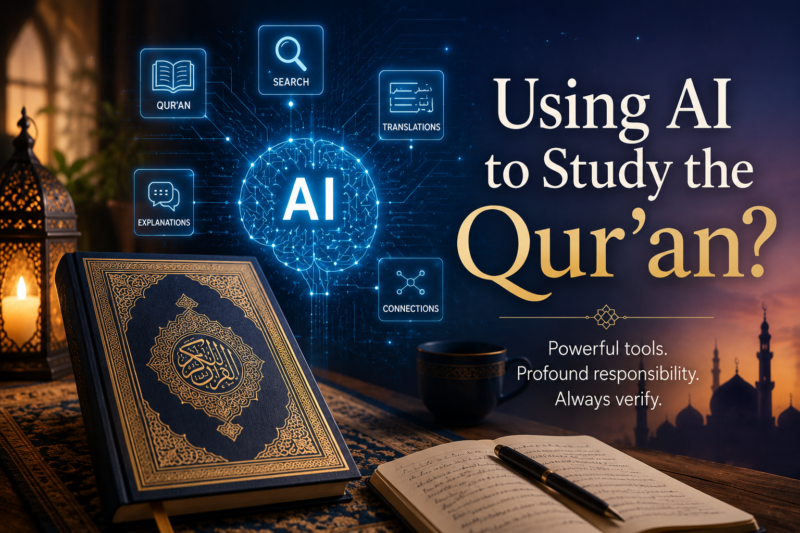
Recently, I had the opportunity to speak with Sister Laila Qadira Yamini about a project she has been developing related to the use of artificial intelligence in Qur’an study.
Our conversation left me reflecting on an issue that I believe deserves greater attention within our community.
Like many people today, I use AI tools in my work, research, and learning. Increasingly, Muslims are also turning to tools such as ChatGPT, Claude, Gemini, and others to explore Qur’anic topics, locate verses, compare translations, prepare halaqah discussions, and deepen their understanding of Allah’s Book.
The accessibility of these tools is remarkable. With little more than a smartphone, information that once required hours of searching can now be gathered in minutes.
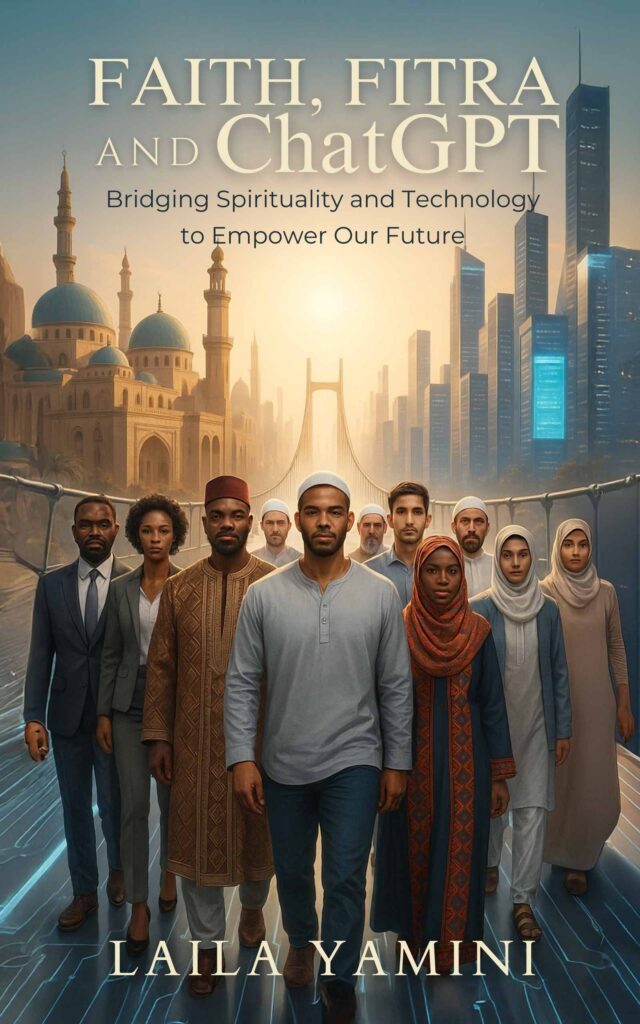
But during our conversation, Sister Laila, who is passionate about AI, and author of Faith, Fitra & ChatGPT, raised an important concern. She cautioned that AI can make information sound completely accurate—even when it is not.
When asked to summarize her thoughts in this matter, she said, “One of the greatest strengths of artificial intelligence is its ability to generate responses that sound intelligent, confident, and convincing. One of its greatest weaknesses is that it can sometimes generate inaccurate information while sounding equally confident.”
As Sister Laila explained, these errors are commonly known as “hallucinations.” When an AI system cannot retrieve information accurately, it may generate details that appear authentic but are actually incorrect.
When studying the Qur’an, this can result in:
- Incorrect surah or ayah references
- Merged or altered verses
- Misquoted translations
- Missing context
- Confusion between Qur’an, tafsir, and personal interpretation
What makes these mistakes particularly concerning is that they are often presented in ways that appear trustworthy and authoritative.
As Muslims, we understand the importance of preserving and transmitting sacred knowledge accurately. Just as we would verify a hadith before sharing it, we should exercise caution when relying on AI-generated information about the Qur’an.
One point from our conversation especially stayed with me:
“AI should be viewed as a tool, not an authority.”
Used responsibly, AI can be tremendously beneficial. It can help organize information, accelerate research, identify themes, and support learning. Yet it cannot replace scholarship, critical thinking, or personal responsibility.
The final responsibility for verification always remains with us.
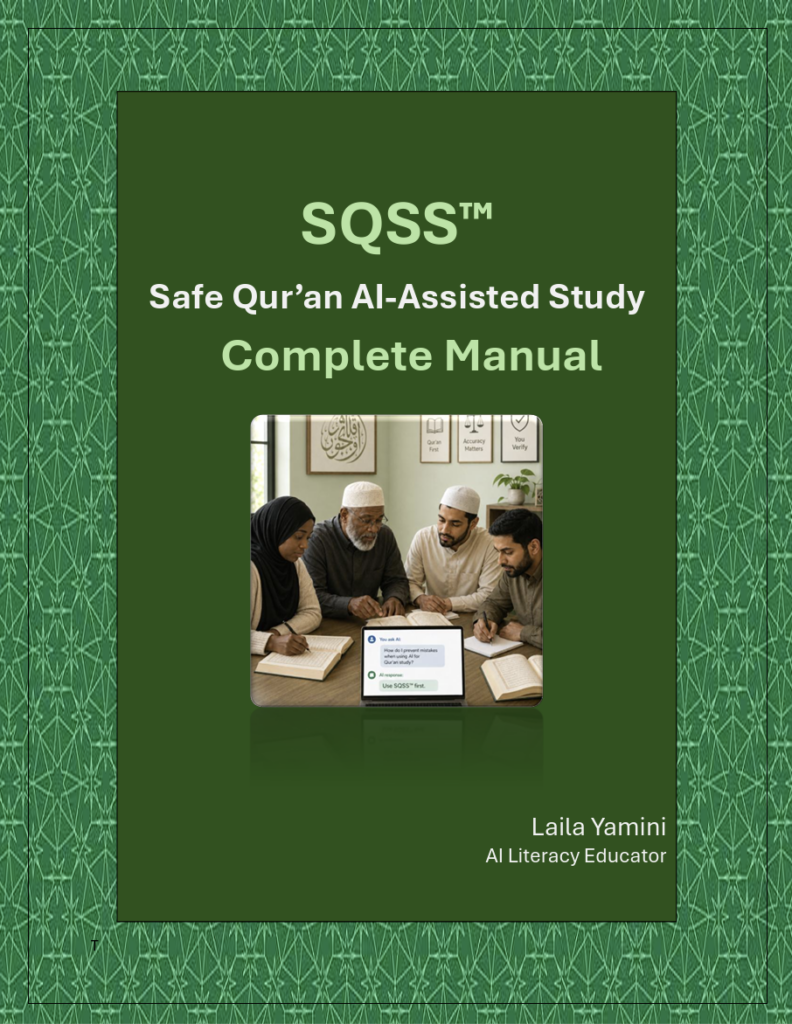
To help address these concerns, Sister Laila has developed SQSS™ (Safe Qur’an Study System), a framework designed to encourage more careful and responsible use of AI during Qur’an study and Islamic research.
The system is intended to help users establish better habits around sourcing, citation, organization, and verification when working with AI-generated content. Importantly, it does not replace scholars, teachers, or traditional learning. Rather, it seeks to help Muslims navigate these emerging technologies with greater awareness and care.
As AI becomes increasingly integrated into everyday life, conversations like this become more important.
The question is no longer whether Muslims will use AI. Many of us already do.
The more important question is whether we will use it responsibly.
May Allah guide us to use every beneficial tool in ways that increase our knowledge, strengthen our discernment, and bring us closer to Him.
Note: Sister Laila Qadira Yamini is currently developing educational resources related to the Safe Qur’an Study System (SQSS™). Readers interested in learning more about her work or supporting the project can visit her LaunchGood campaign.

Akanke is a communications specialist and consultant with a degree in Communication from Georgia State University, focused on film, TV, and cultural anthropology. Her career is diverse, and her interests span various creative forms of expression — from producing TV and radio shows to creating documentaries, writing, graphic design, and life coaching, she strives to make a lasting and authentic impact wherever she goes. She reverted to Islam in 1994 and is passionate about Islam and Islamic spirituality, a passion that runs through nearly every corner of her work. Akanke has been a dedicated supporter of the Muslim Alliance in North America (MANA) since 2007, currently serving as the organization’s Board Vice President — working alongside the Board President and Secretary to help shape MANA’s trajectory — and previously served for several years as its Communications Director. A native of Atlanta, she now resides in Dayton, Ohio.