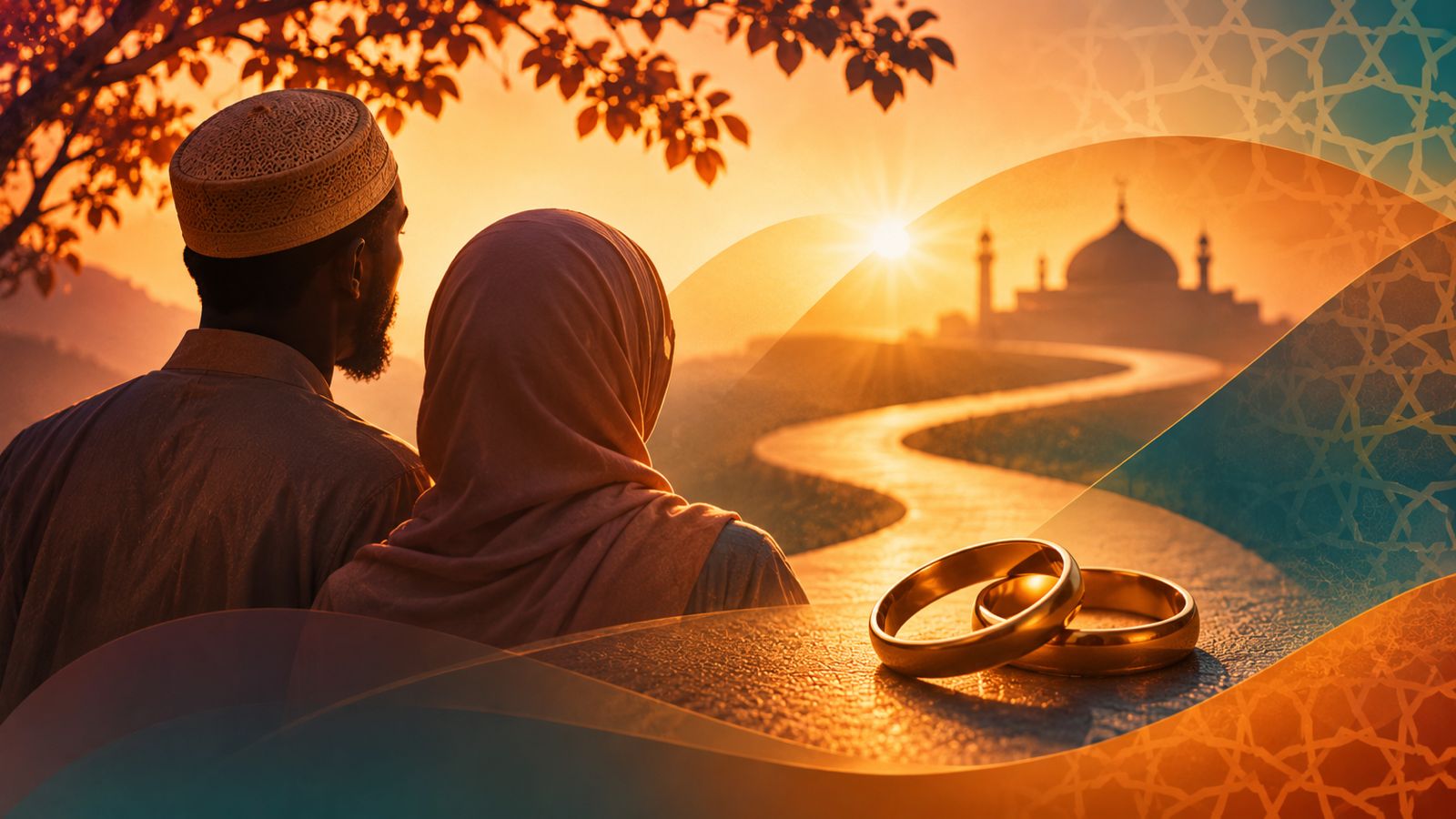
The Changing Realities of Marriage and the Missing Support Within Our Communities
From Friday khutbahs to family dinner tables, African American Muslims hear a consistent message about marriage. Imams remind us that marriage completes half of our deen. Parents ask when their son or daughter will marry. Community leaders speak of strong families as the foundation of a healthy ummah. However, once someone decides they are ready to marry, the guidance often stops. Where does the search actually begin? In many of our communities, there is no clear answer. Someone can pray at the same masjid for years, volunteer at every fundraiser, and never be introduced to a single prospective spouse. Being active in a community does not mean that community offers intentional avenues for marriage.
For earlier generations, the path was often clearer. Many communities were smaller and closer, and families had known one another for years. That closeness did not help everyone equally, but it offered familiarity and the sense that others cared about a person’s search for a spouse. Today, many of those conditions have changed. Families are spread across cities and states. Work and school pull people away from the communities that raised them. And for those of us who are the first or second generation of Muslims in our families, there may be few Muslim relatives to turn to for support.
Determining compatibility takes more than a few conversations. Couples need to talk honestly about religious practice, money, children, extended family, and how they handle conflict. These are not easy topics to raise with someone new. Many people hold back, worried about seeming too forward or unsure how to have these conversations within Islamic guidelines. When that happens, important differences may not come up until a couple has already committed. Avoiding those late surprises requires time, clear intentions, and often someone to guide the process. Yet most of what our communities offer is built around worship and learning, not marriage.
One reason our communities have not filled this gap is that three separate questions tend to be treated as one: whether a person wants to marry, whether they are ready to marry, and whether they have a real opportunity to do so. When someone remains single despite wanting a spouse, we usually look for the explanation in the individual. Perhaps their standards are too high. Perhaps they need to work on themselves. Sometimes that is true. But it is not always the answer.
Brothers are often assumed to have the easier path because they are expected to initiate, but initiating requires knowing whom to approach. Sisters often rely on family or friends to make an introduction, but when networks are thin, that introduction may never come. Both can be fully prepared for marriage and still never meet anyone compatible. Yet the advice they often hear from family, friends, and even community leaders is to keep working on themselves. That advice misses the point.
Over time, that advice can also do harm. Someone who hears it often enough may begin to believe something is wrong with them. Some lose confidence. Others quietly stop looking. They have not stopped wanting marriage. The search has begun to feel like a judgment on who they are. Preparation and opportunity are different needs. We have invested heavily in the first and left the second largely to chance.
Much of what is needed already exists among us. Parents can look beyond their own circles when a son or daughter is searching for a spouse. An imam who notices that a congregant has been single for years can ask how their search is going and help them find support within the community. Friends can make introductions with the seriousness they would want for themselves. None of these steps requires a new program or a large budget. They require us to see a single person’s search as something the whole community has a stake in. It is not a private matter to be handled alone. With that shift, fewer people would be left to search on their own.
Until that happens, many single Muslims are turning to apps. Apps can connect African American Muslims from across the country and beyond. Whether apps offer everything a search for a spouse requires is another question.
The first in a three-part series examining marriage within the African American Muslim community, contemporary matchmaking, and the possibilities for community-supported courtship.
Stephanie Bonner MSW, LICSW| Founder, Matchwell.love
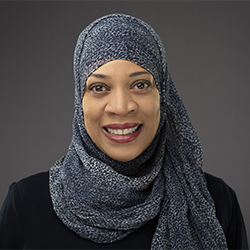
Stephanie Bonner, MSW, LICSW, is a Licensed Clinical Social Worker with over 20 years of experience in mental health and community-based work. Her private practice has included extensive work with Muslim individuals and couples on relationship challenges, emotional healing, and marriage preparation. She is the founder of Matchwell.love, a faith-centered matchmaking and community platform developed in partnership with the Muslim Alliance in North America (MANA) to strengthen African American Muslim marriages through readiness, intentional connection, and community support. Through this work, she seeks to reduce isolation and rebuild community-centered pathways to marriage. She is also a PhD candidate in Business Psychology and Organizational Leadership.