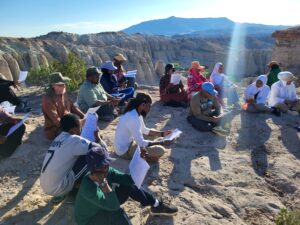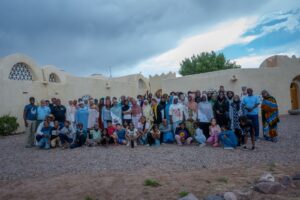
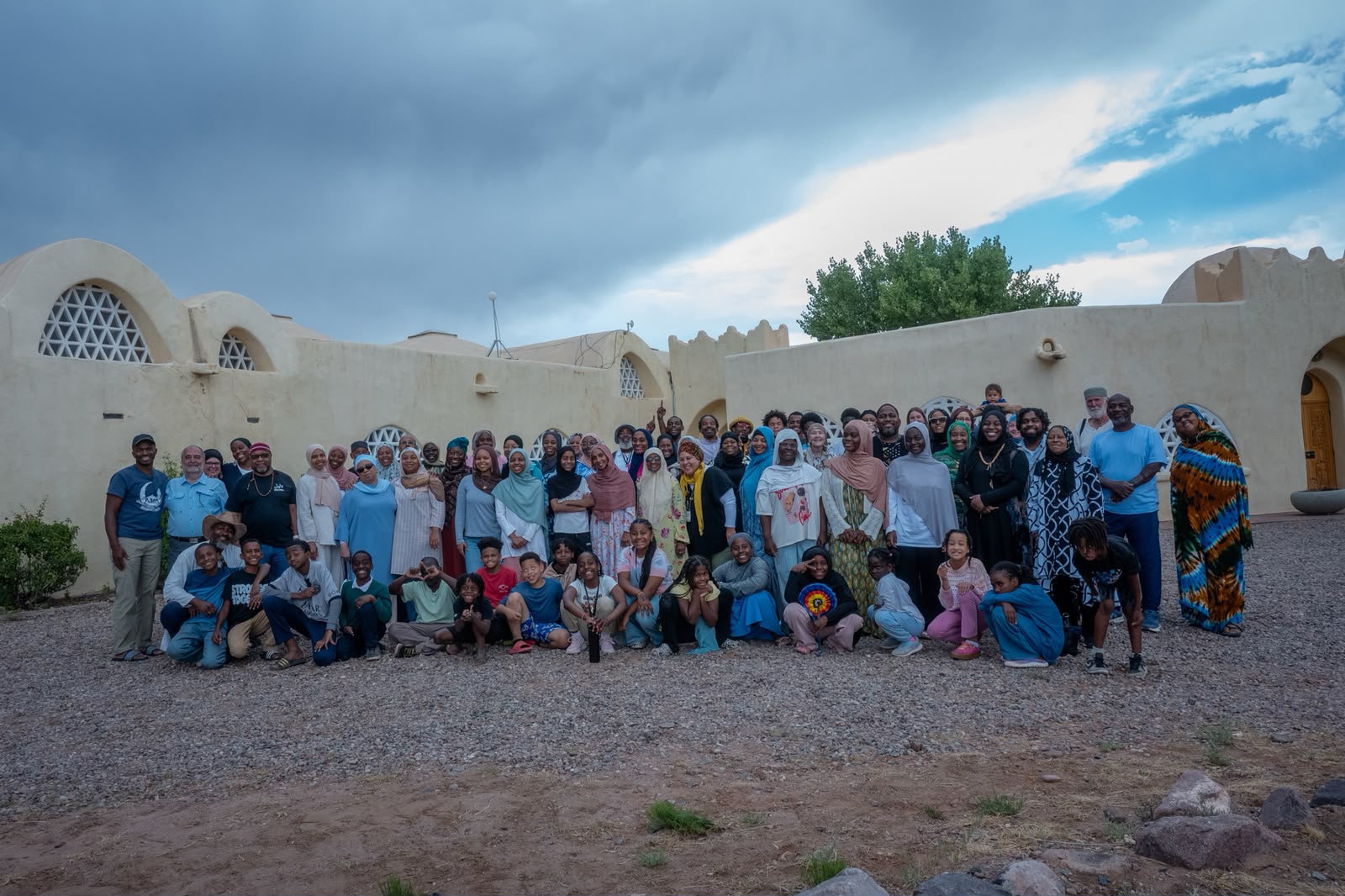
To understand the spirit of the AHAD Collective’s annual Black Muslim Family Retreat, one must first understand the concept of marronage. Historically, marronage refers to the brave individuals who escaped the brutality of chattel slavery to form independent, self-sustaining communities in remote geography—heroes like Francois Mackandal, or the Maroon communities that fled into the dense, untamed terrain of the Great Dismal Swamp and thrived on their own terms. They did not conform to a system designed to oppress them; instead, they carved out sanctuaries of freedom, safety, and self-determination.
At this year’s retreat, surrounded by nature and surrounded by family, marronage was not merely an abstract historical concept. It was a living, breathing blueprint. It was a call to build spaces where our faith, culture, and collective identity could exist without apology. Yet, while we spent the weekend engaging in high-level discussions about legacy and resistance, the truest, most profound lesson on marronage came not from a lecture hall, but from a ten-year-old boy named Jabari on an open-mic stage.
The evening was meant to be a relaxed family-friendly open mic. The air was cool, the masjid courtyard was filled with families, and the stage was open to anyone brave enough to step up. Jabari walked timidly toward the microphone, clearly battling a heavy wave of nerves. He softly explained that he would be performing a martial arts form—a specific karate routine complete with traditional movement and kiai, the sharp battle cry used in martial arts.
Jabari took a deep breath, stepped into his stance, and began. He launched into a deliberate, slow-motion technique, accompanied by a loud, sudden vocal cry. It was earnest and heartfelt, but in the innocent unpredictability of childhood, a few kids his age in the audience stifled a chuckle. It was not malicious, but to a self-conscious ten-year-old putting his heart on the line, it felt catastrophic.
Jabari froze. His arms dropped, his fists clenched, and he stood paralyzed in front of the crowd for what felt like an eternity. Then, overwhelmed, he turned and fled the stage, disappearing into the corridors of the masjid.
What happened next was the first shift in my heart. The very boys who had unintentionally humiliated him did not sit back or laugh off his exit. Instinctively, one by one, then all together like a pack of young brothers, they ran into the masjid after him.
The courtyard fell into a deep, respectful silence. We wanted Jabari to succeed; we wanted him to know he was safe here. As the show continued, about twenty minutes passed before we saw movement at the entrance of the courtyard. The boys were returning, and Jabari was in the middle of them. They weren’t just walking him back—they were hyping him up like a champion entering an arena. They cheered, raised their arms, and shouted, “Get ready for Jabari!”
He mounted the stage a second time. But as he began his moves, the ghost of his earlier hesitation crept back. He slowed down, visibly intimidated by the spotlight. Wanting to lift his spirits, I discreetly whispered “You got it! You got it!” But my quiet but vigorous affirmations seemed to inadvertently heighten his self-consciousness. Overwhelmed once more, he ran off again.
This time, the adults stepped in. Imam Mendez urged the entire audience to roar with support. We let out a thunderous cheer, wanting our love to envelop him. The Imam himself walked into the corridors to find Jabari. Ten minutes later, Jabari walked out for his third attempt.
He stepped onto the stage, determined. He began his form quietly this time, moving methodically. But as he slowed down near the middle of his routine, my instinct as a cheerer kicked in again—I raised my breath to shout another encouragement.
Before I could utter a word, the Imam looked directly at me and shook his head firmly, mouthing with quiet authority: Be quiet.
I checked myself instantly. I deeply respect the Imam’s wisdom, and in that split second, I understood what was happening. Jabari didn’t need the external noise of our excitement or our pity. He didn’t need us to carry him; he needed the space to carry himself. He needed quiet, still air so he could hear his own inner strength. The Imam knew exactly what the moment required, even if it meant giving a firm direction to those of us with good intentions.
Silence fell over the courtyard. Jabari took a breath, held his ground, and moved through the rest of his performance with focused precision. After he struck his final pose, the entire crowd erupted into a wall of applause.
Later that night, I was blessed with the privilege of leading the community in Isha prayer. As I went down into sajdah (prostration), forehead pressed against the floor, the gravity of what we had witnessed hit me. My prayer became deeply personal.
Oh Allah, Oh The Bestower, Oh The Subtle One, Oh The One Who Guides, I prayed: make me like Imam Mendez, a leader who guides with insight and strength. Make me like Jabari, an individual who strives for excellence and never gives up, even when feeling defeated. Lastly, Ya Allah, place me among and make me a contributor to a community that embodies love and brotherhood, like those who helped Jabari back up. O Allah, send blessings upon our master Muhammad and upon his family and companions, and grant them peace. Ameen
That night showed me what the AHAD Collective is building. Marronage is not just a historical term about escaping into the dismal swamps of the past. It is the active creation of modern sanctuaries where our children can falter, be gathered up by their peers, guided by wise leaders, and ultimately learn to stand tall on their own two feet.
To the readers of MANA: spaces like the Black Muslim Family Retreat are vital. They are the safe harbors where our faith, our brotherhood, and our resilience are forged. You are not just invited to join us next time—you are needed. Come be a part of a community that lifts each other up, learns together, and ensures that no matter how many times we freeze, we always finish the performance together.

Lut Williams is a Hafith (has completely memorized the entire Holy Quran by heart) who was born in Atlanta, Georgia, to Hud Williams and Dr. Jamillah Karim. He now lives with his family in Dallas, Texas. He began his Quran and hafith studies in Medina Baye, Senegal, and finished his memorization in Dallas. He is currently in his sophomore year of homeschooling. He takes a mixture of high school and college classes. He enjoys reading biography and self-improvement books, playing soccer/basketball, teaching Quran to community members, and spending time with family.