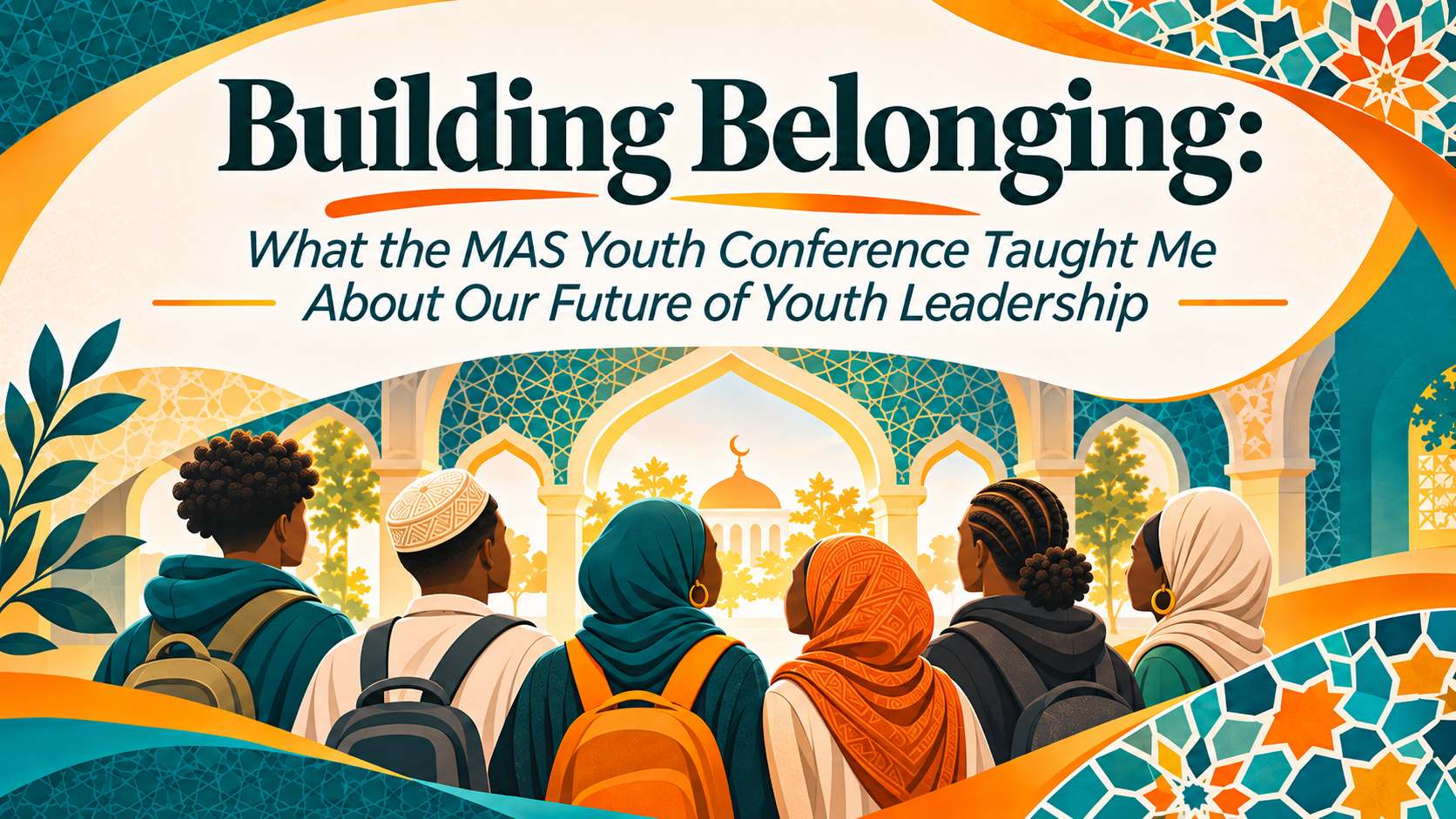
There is something powerful about walking into a gathering of Muslims and realizing that you have not simply been invited to attend. You have been welcomed to participate, contribute and belong. That was my experience at the Muslim American Society (MAS) Youth Conference in Atlanta, and it is why I left encouraged about what is possible for Muslim youth in America.
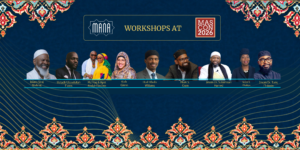
I attended through a connection made by the Muslim Alliance in North America (MANA) with the Gary Muslim Center in Gary, Indiana, where I most recently served as Development Director. My work there included helping design youth and young adult programs with an essential idea: young Muslims need more than activities. They need relationships, spiritual nourishment and opportunities to recognize their own capacity to lead.
The conference offered all three. Its thoughtful organization, welcoming atmosphere and focus on Islamic growth made it an excellent experience. I arrived eager to learn; I left with new connections, renewed purpose and a stronger conviction that our communities can accomplish more together.
More Than a Seat in the Room
After our introduction to MAS Youth and the conference team, we were assigned roles in the gathering. My responsibility included observing and supporting youth leadership while engaging with adults involved in the programming. That gave me a view of the conference not only as a participant, but also as someone who designs community programs and understands the work behind a successful event.
The Marriott venue in Atlanta provided a comfortable setting for learning and fellowship. Yet what impressed me most was not the building. It was the care behind the experience: young people had space to engage, adults had opportunities to guide and listen, and the programming connected practical development to Islamic purpose.
I also appreciated the opportunity to see familiar faces and connect with professionals whose work intersects with the needs of our communities, including Hud Williams of Amana Mutual Funds. Encounters like these matter. A presentation can introduce an idea, but a conversation can turn that idea into a relationship. Conferences become especially valuable when we leave knowing whom to call, whom to learn from and whom we might work alongside.
Faith Is Not an Extra Activity
For me, the spiritual dimensions of the conference were its center of gravity. Salah, shared worship and opportunities for reflection were not interruptions between sessions; they were part of what made the gathering meaningful.
We often talk about youth development in terms of skills, confidence and opportunity. All of those things matter. But for Muslim youth, especially those navigating life in American schools, neighborhoods and digital spaces, the deeper question is how those skills remain connected to faith. What does it mean to succeed while holding firmly to Islam? Where can a young person ask questions without feeling dismissed? Who will remind them that they belong to an ummah larger than any one city or cultural background?
This is where Tarbiyah (the intentional nurturing of faith and character) becomes indispensable. Halaqah, conversation, mentorship and worship can help young Muslims build an Islamic identity that is lived rather than merely inherited. A teenager may come for friendship or a workshop and leave feeling more confident about prayer. A college student may find a mentor. A parent may discover a way to keep a child engaged with the masjid. An elder may see evidence that the next generation is ready to carry the work forward.
The conference reminded me that the goal is not simply to keep young people busy. It is to help them stay connected to Allah, to one another and to a community that values their questions as much as their potential.
Different Histories, Shared Responsibility
Another meaningful part of my experience was connecting with brothers and sisters I thought of affectionately as an African American Muslim delegation. We came with our own histories, local concerns and commitments to youth, especially in urban communities. We also came ready to participate.
At one point I thought about Ruby Bridges, whose courage as a child helped open doors in American education. I do not compare our conference experience to the hardship she endured. Rather, her story came to mind as a light reminder that entering a new space can make the path more familiar for those who follow. Sometimes a bridge begins with an invitation, a handshake and the decision to keep showing up.
African American Muslims have helped shape Islam in the United States across generations. Muslim families with immigrant roots have also built institutions and opportunities that enrich our shared religious life. These experiences are not competing narratives. They are chapters of the same American Muslim story, and our children benefit when they can learn from all of them.
I would love to see more African American Muslims become active in MAS by attending gatherings, joining chapters, contributing to programming and helping shape leadership conversations. Representation matters most when it develops into participation and shared responsibility. We should not only be visible in the audience; we should help build what comes next.
I also hope MANA continues its valuable work of connecting communities and opening pathways into spaces where relationships can grow. Its role in bringing our group into this gathering demonstrated the importance of organizations willing to make introductions and sustain them. With continued collaboration, barriers that once kept communities apart can become building blocks for lasting partnerships.
What We Bring Home Matters
I measure a conference not only by what happens during the weekend, but by what changes afterward. Do we return home with new ideas? Have we met people who can help us improve a program? Are we more prepared to serve our young people?
The workshops and leadership discussions gave me opportunities to think about strategy, planning and organizational sustainability. As a nonprofit consultant and youth program developer, I know that good intentions are only the beginning. A successful initiative needs committed people, clear systems, resources and an understanding of the families it serves.
The experience affirmed my work developing the Urban Muslim Association and Youth in Motion, initiatives intended to create spaces for young people to connect through faith, recreation, education and positive relationships. My hope is to help create environments where a young Muslim can play soccer, explore a new interest, build friendships and still understand that Islamic character is at the heart of the experience.
That work is strengthened when organizations share ideas instead of operating in isolation. One community may have experience with mentorship; another may have developed effective recreation programs; another may know how to mobilize volunteers or connect families with resources. We do not have to reinvent every solution. We can learn from one another, adapt thoughtfully and remain accountable to the young people we serve.
An Invitation Across Generations
To the young Muslim wondering whether a conference like this is for you: I encourage you to go. You may find a friend, an answer to a question, a leadership opportunity or simply the comfort of being surrounded by people who understand the importance of your faith.
To parents, educators and community leaders: make room for youth participation that goes beyond attendance. Listen to what young people are asking for. Invite them to help plan, lead and evaluate the programs intended for them. Their perspective is not a courtesy; it is essential.
And to our elders: your presence matters. Your memories, experience and commitment to building Muslim institutions can help young people understand the foundations beneath their feet. When generations gather with mutual respect, we gain more than a successful event. We gain continuity.
Since the conference, I have joined MAS. I encourage others to explore membership, both local or virtual chapters and to consider attending a future youth conference. The value of belonging grows when participation continues long after the closing session.
I am grateful to MANA, MAS, the organizers, youth leaders, volunteers and everyone who helped make this experience so positive. I felt welcomed, spiritually uplifted and professionally encouraged. Above all, I was reminded that the future of Muslim youth in America is not the responsibility of one organization, one ethnicity or one generation.
It belongs to all of us. When we make room for one another, share what we know and keep faith at the center, we turn introductions into relationships, relationships into service and barriers into building blocks. Insha’Allah, that is the kind of belonging our young people will inherit.
http://www.Haalproject.org