Inna lillahi wa inna ilayhi raji’un — Surely we belong to Allah, and to Him we return.
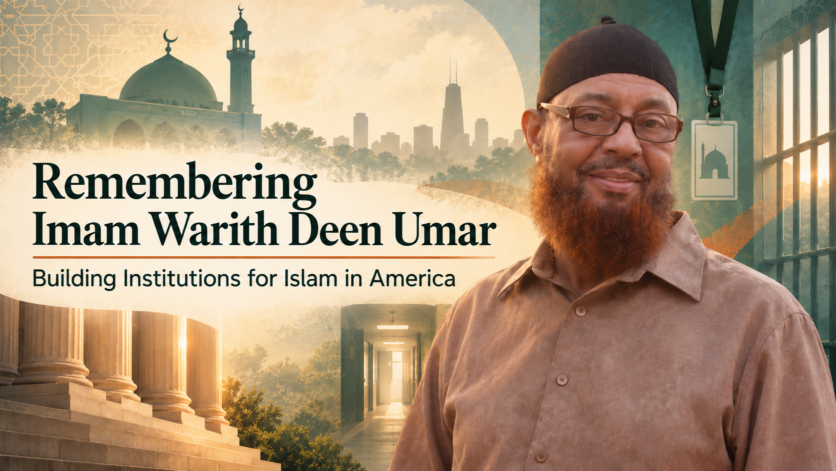
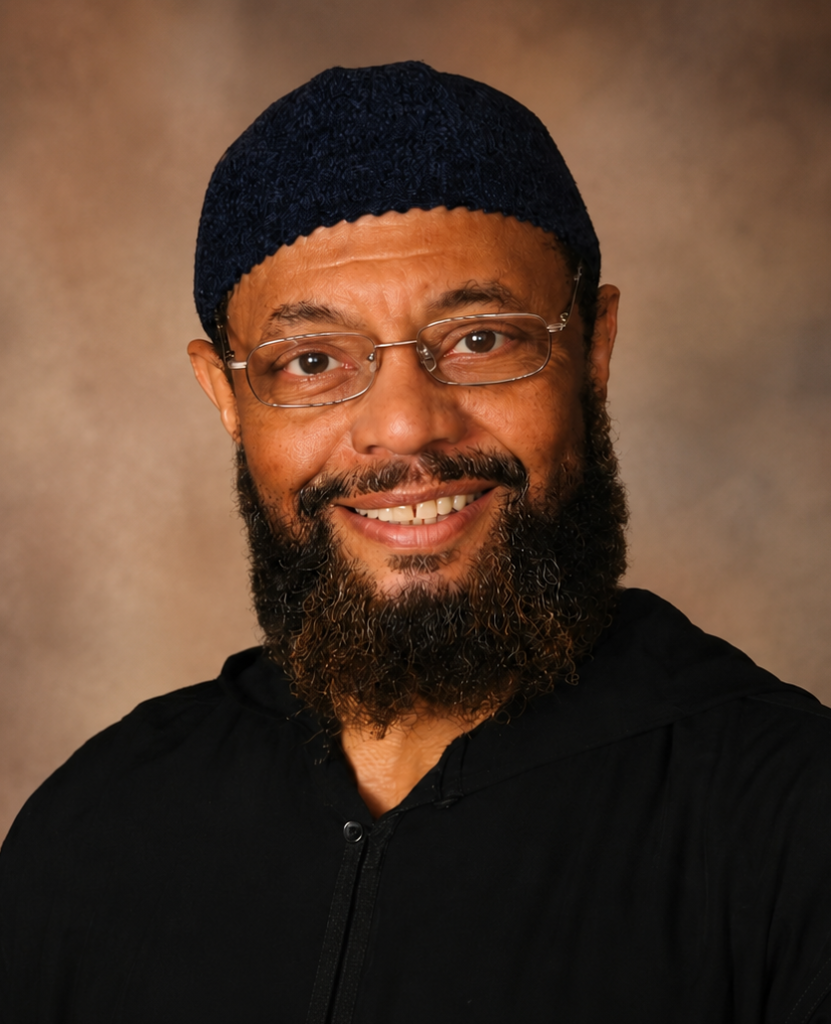
On May 18, 2026, Imam Warith Deen Umar returned to Allah at the age of 81, leaving behind an extraordinary legacy of Muslim institution-building, chaplaincy, halal advocacy, civil rights, family leadership, and service.
Imam Umar was a powerful voice for the establishment of Islam in America. In his commitment to the cause of Muslims, I believe there were times when he struck fear in the hearts of the establishment—not unlike Sayyidina ʿUmar ibn al-Khattab, whose courage and strength gave confidence to the early Muslim community during the mission of the Prophet Muhammad ﷺ.
But Imam Umar’s importance was not simply that he spoke forcefully. He understood that Islam in America needed institutions.
Making Muslim Chaplaincy a Profession
In 1975, Imam Warith Deen Umar became one of the first two full-time Muslim chaplains employed by the New York State prison system. Scholarship on the history of American Muslim chaplaincy describes him as the first full-time, paid Muslim chaplain in the United States.
Over the course of approximately 25 years in New York corrections, he rose to become Muslim Ministerial Program Coordinator, helping recruit, train, and supervise Muslim chaplains.
He also became the founding president of the National Association of Muslim Chaplains (NAMC), creating a national structure through which Muslim chaplains could organize, advocate, and develop professionally.
Imam Umar was unwavering in his belief that people should be paid fairly for their labor. For him, that included imams entering prisons, universities, hospitals, and other institutions to provide pastoral and religious care.
He believed that Muslim religious leaders should not merely be tolerated as volunteers. Their work should be recognized, respected, professionalized, and compensated.
I experienced this personally.
During my own career at Howard University, Imam Umar challenged the university to have me officially installed as its first Muslim chaplain. He subsequently applied pressure—unsuccessfully at the time—for Howard to compensate my position.
His wish was not fulfilled during my tenure. Yet the seed he helped plant eventually bore fruit. Today, the Muslim chaplaincy at Howard is a compensated position, providing pastoral care to Muslim students while contributing to the broader spiritual and campus life of the university.
Looking back, I understand his intervention at Howard differently now. It was not simply something he was doing for me.
It was part of his larger struggle to establish Muslim chaplaincy as a legitimate profession in American institutions.
From Prison Ministry to Religious Rights
Imam Umar understood that incarcerated Muslims deserved access to their religion with dignity.
His work helped build Muslim prison ministry on an institutional scale, and he is credited with helping introduce halal/zabiha food into the American prison system.
Think about what that represents.
Today, when an incarcerated Muslim receives halal food, attends Jumu’ah, meets with a Muslim chaplain, or receives religious guidance from an imam employed by the institution, we are witnessing the fruits of struggles undertaken by earlier generations of Muslim leaders.
Imam Warith Deen Umar was among those pioneers.
Halal Watch: Institutionalizing Halal in America
His vision went well beyond chaplaincy.
In 1985, Imam Umar founded Halal Watch, a pioneering institution dedicated to halal certification, inspection, consumer education, and advocacy.
He understood that if Muslims were going to establish a lasting presence in America, halal could not depend merely upon someone saying that a product was permissible.
There needed to be standards.
There needed to be inspection.
There needed to be accountability.
There needed to be consumer confidence.
And ultimately, there needed to be institutions capable of protecting the integrity of halal.
His work extended into public policy. In 2000, Imam Umar played an important role in the development and implementation of New Jersey’s halal consumer-protection law, helping move halal integrity beyond private certification into the realm of public consumer protection.
The halal certification industry we see across America today did not simply appear.
People built it.
Imam Warith Deen Umar was one of those builders.
Formidable — Yet Humble
For all of his formidable personality, Imam Umar was also a man capable of tremendous humility.
I remember when he came to Howard University to join a group of students with whom we would make the pilgrimage to Makkah.
He did not arrive demanding special accommodations because of his stature.
He joined the group.
He accepted that he could sleep anywhere as we prepared for our departure—even on the floor of the musalla.
That image has remained with me:
A strong man.
An accomplished man.
A respected leader.
Yet a humble servant of Allah preparing himself for Hajj.
A Maintainer and Protector of His Family
He was also an exemplar of the responsibility a man carries toward his family.
Allah describes men in Surah al-Nisa, 4:34, as qawwamun—those entrusted with responsibility for maintaining, protecting, and caring for their families.
Imam Umar sought to live that responsibility.
He was married to his wife, Islah Walia Umar, for 50 years. Together, they had 12 children, 10 of whom survived him, as well as 22 grandchildren and nine great-grandchildren.
For all of the institutions he built and battles he fought, his family remained central to his life.
The Signs of a Legacy
Much more can—and should—be written about Imam Warith Deen Umar.
But perhaps we can begin by learning to recognize his legacy when we see it.
When we meet a person whose life was changed while incarcerated because an imam entered a prison and offered guidance, dignity, faith, and hope—
remember Imam Warith Deen Umar.
When we see a Muslim chaplain receiving a salary to serve Muslims in a prison, university, hospital, military installation, or other American institution—
remember Imam Warith Deen Umar.
When we see an incarcerated Muslim receiving halal food—
remember Imam Warith Deen Umar.
And whenever we walk down the streets of New York—or anywhere in America—and see the word HALAL emblazoned across the side of a food truck, displayed in a restaurant window, or printed on a certified product—
remember Imam Warith Deen Umar.
What appears commonplace today was once a vision.
What appears normal today was once a struggle.
And what today functions as an institution was once an idea carried in the heart of someone courageous enough to insist:
Muslims belong here.
Islam belongs here.
And our institutions must be built to last.
Imam Warith Deen Umar did not simply minister within American institutions.
He helped change the institutions themselves.
May Allah count every person guided through the prison ministry he helped establish; every Muslim chaplain whose work is now recognized and compensated; every incarcerated Muslim able to practice Islam with dignity; every family that consumes halal food with confidence; every institution strengthened by the seeds he planted; and every person who continues to benefit from his work as sadaqah jariyah in the scale of our late brother.
May Allah forgive Imam Warith Deen Umar, have mercy upon him, illuminate and expand his grave, accept his service to Islam and humanity, multiply the reward of everything he left behind, and grant him the highest station in Jannat al-Firdaws.
Ameen.
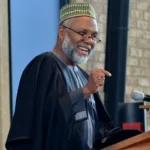
Imam Johari Abdul-Malik is a nationally recognized Muslim chaplain, educator, interfaith leader, and community advocate. He served as Howard University’s first Muslim chaplain, Director of Outreach at Dar Al-Hijrah Islamic Center, and head of the National Association of Muslim Chaplains in Higher Education. He has also held leadership roles with the Muslim Alliance in North America and the Muslim Advocacy Commission of Washington, D.C. Known for supporting masjids, schools, relief organizations, and interfaith initiatives, Imam Johari combines religious leadership with a strong academic background in chemistry, genetics, bioethics, pastoral care, and Islamic studies. His work centers on strengthening Muslim institutions, serving vulnerable communities, and inspiring people to improve themselves and the world around them.