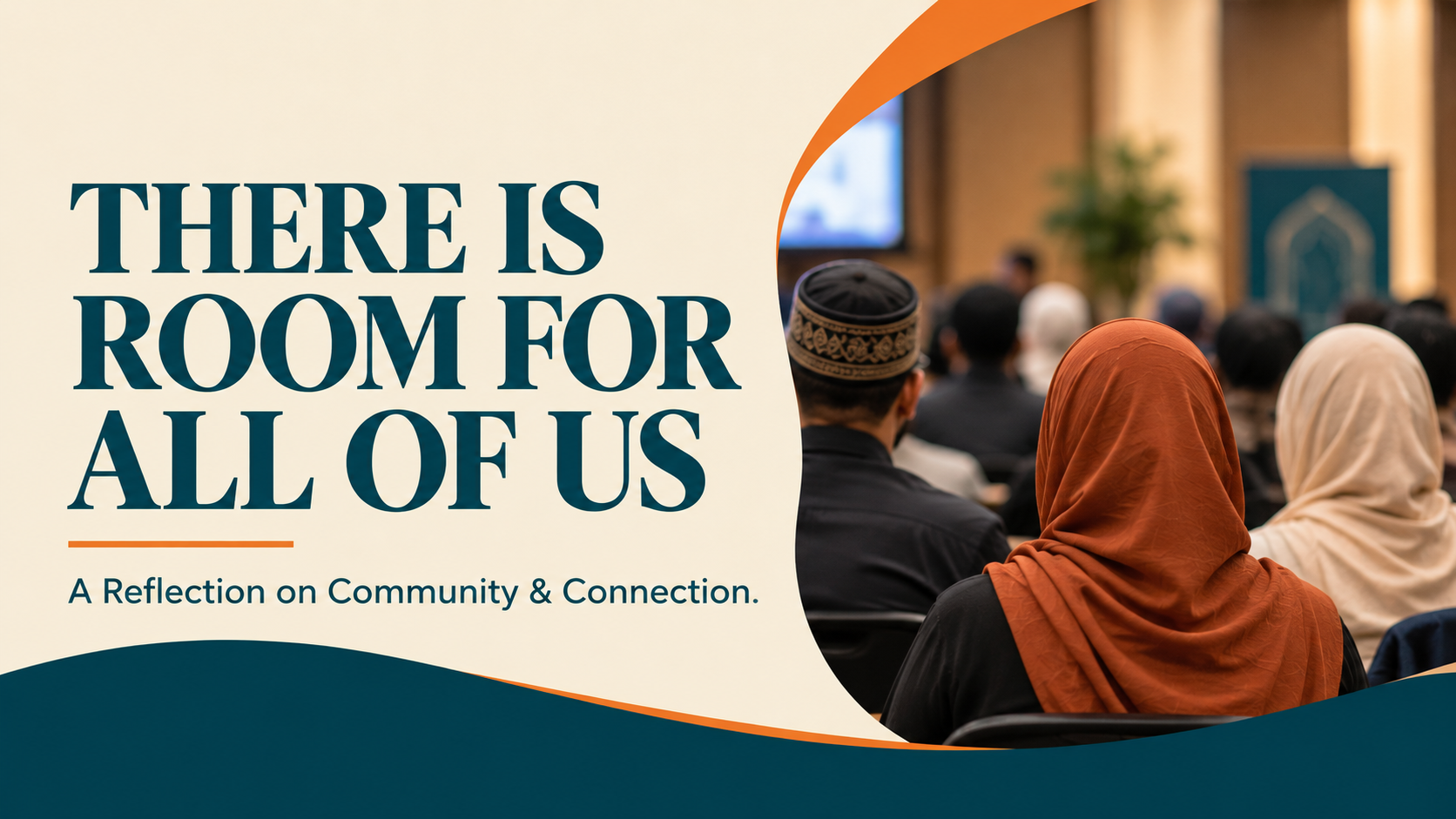
On October 30–31, I joined United Muslim Americans of Richmond for “The Gathering: Conference & Unity Banquet” at Virginia Union University. I was invited to join a panel examining the state of African American Muslim communities. We were asked to consider our strengths and opportunities while also being honest about our weaknesses and threats.
Those conversations are needed. But sometimes the gathering itself can teach us as much as the presentations. That was my experience in Richmond.
Alhamdulilah, the event was well organized. However, what stood out the most was the range of people and perspectives the organizers brought together. There were religious and political differences represented that I do not always see welcomed in the same space. It showed an openness among the organizers and reminded me that African American Muslims are not a monolith. We have different experiences and different ideas about how to move our community forward. Its a beautiful thing to have spaces where we can discuss those differences and still recognize our responsibility to one another.
That spirit of togetherness extended beyond the panel discussions. At one point, the organizers asked the people who had financially supported the event to stand and come to the stage. I was surprised by the range of ages. Some appeared to be in their thirties. Others appeared to be in their eighties. Across those generations were people who had decided that this gathering was worth investing in.
The entertainment reflected that same range. A young artist offered something that connected with the younger generation. There were also legends who had been performing for fifty years. It was a simple but meaningful example of how we can honor what came before us while making room for the next generation.
This experience in Richmond made me reflect on something that I’m calling “Black Sabr.” We often translate sabr as patience. But patient perseverance is likely better translation of its meaning. Our people have endured generations of extreme oppression. Through that history, we have learned how to keep going under conditions that were meant to break us.
That perseverance is now in our DNA. The question is how we will use it. How can it benefit us and benefit those around us. Building community requires sustained effort. So does maintaining relationships with people whose views differ from our own. Can we bring that same determination to have the Black Sabr to stay connected?
During dinner, I heard a story that gave this question another dimension. A pastor at an Ethiopian church in Richmond began listening to the Honorable Elijah Muhammad and eventually decided that he wanted to join the Fruit of Islam. When the Pastor told his congregation that he would need to resign, they decided to follow him.
I had the honor of meeting the last living member of that congregation at this event in Richmond. I kept thinking about how much history she carried. Here was a remarkable story from Richmond that many people are not aware of. How many more stories remain in the hearts and minds of our elders because no one has asked or taken the time to record them?
I also found myself thinking about the bonds within that congregation. I do not know all the details of their journey. But the decision to join the spiritual journey of their leader reminded me that community has a powerful place in people’s lives. People need relationships they can depend on. They need to know that someone sincerely cares about them.
Tawheed and Sunnah are central to our faith. But the prophetic model also teaches us how to important it is to care for one another when building a community. We should be asking ourselves whether people experience love and care in the spaces we lead. One of the organizers of the event kept asking a question that still sits with me. “If you, your masjid, or the Muslims were to pack up and leave tomorrow….would you be missed?”
I left Richmond encouraged by what I saw and excited about the work ahead. Unity is not uniformity. We can have different masjids and still consider ourselves one community. We can disagree and continue to support work that benefits us all. We must quickly figure out creative ways to live into the commandment from our Lord to stay together and not be divided.
That will take patient perseverance. We will need the Black Sabr that we have developed from our trials and tribulations. We must let our difference become opportunities to learn about one another and not hate one another so that we can build something beautiful together.
The world needs the light of the Muslim community. We must care for and nurture our flame. There is simply too much on the line for us to allow it to dwindle through excessive infighting. May Allah help us preserve our bonds and allow us to patiently persevere together.
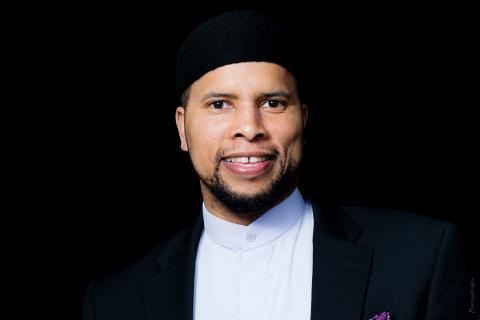
Joshua Salaam has strong roots in the American Muslim community. He started attending national Muslim youth camps at the age of 12 and continued as a participant, counselor and speaker for over 30 years. Joshua entered the U.S. Air Force in 1995 and served as a Police officer for four years. He was a key contributor in establishing Friday prayer services on base for Muslim military members and went on to serve as an Imam in Goldsboro, NC for several years. After the military, Joshua immersed himself in community activism. He managed the Civil Rights department for the Council on American-Islamic Relations from 2000-2004 and helped oversee a Baltimore Muslim community and neighborhood development project from 2004-2007. Before starting at Duke in July 2018, Joshua worked with youth and families for 11 years at one of the largest Muslim communities in America. His diverse background gives him a unique perspective on many issues and helps him connect with students. He holds a Master’s Degree in Religious Studies and a Doctorate of Ministry from Hartford Seminary. He is the current President of MANA’s Board of Directors.